
At a family dinner, my daughter asked for dessert. My mom said, “Premium treats are for premium grandkids.” Everyone smiled. I calmly got our coats and left. At midnight, Mom texted: “Plz, but I…”
- Stories
Cuisine And Stories
- 0
- 11 minutes read
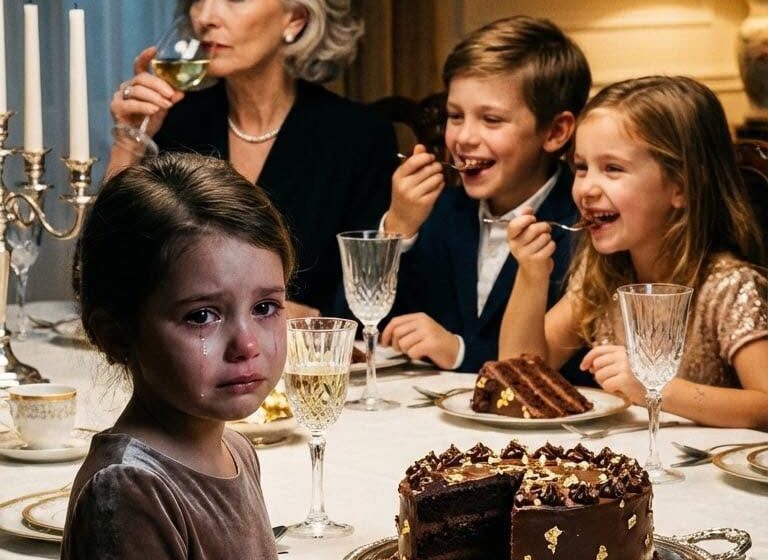
The Sunday dinner table was a minefield set with Mom’s best bone china. The floral patterns on the plates seemed to mock the tension in the room, delicate pink roses blooming beneath the weight of pot roast and unsaid resentments. My daughter, Emma, six years old and small for her age, sat on a stack of cushions, her legs swinging nervously. She had barely touched her glazed carrots, her eyes fixed on the crystal cake stand on the kitchen counter.
Inside the dome sat a decadent, three-layer dark chocolate cake, dusted with gold leaf. It was a masterpiece of a dessert, likely ordered from the French bakery across town that charged five dollars for a croissant.
“Grandma,” Emma asked, her voice a soft, polite chime in the clatter of silverware. “Can I have some cake, please?”
Mom didn’t even look up from her wine glass. She took a slow sip of her Chardonnay, savoring the oaky finish, before delivering the blow.
“Premium treats are for premium grandkids, sweetheart.”
The table went silent. Not a casual lull in conversation, but a vacuum. For exactly three seconds, the air left the room.
Then, my sister Jennifer laughed.
It was a sharp, jagged sound that broke the tension everyone else was pretending didn’t exist. “Mom, that’s hilarious,” Jennifer said, reaching over to cut herself a thick, generous slice. “Emma, honey, maybe next time. You know how it is.”
My brother Michael nodded, his mouth full of beef. “Yeah, kiddo. We saved the good stuff for a special occasion.”
Emma’s face fell. It wasn’t a tantrum; it was a quiet implosion. She looked at me, her large brown eyes swimming with confusion, trying to calculate the mathematics of why she wasn’t special enough for a slice of cake. My daughter didn’t know the history. She didn’t know that I had been the family punching bag for fifteen years. She didn’t know that her grandmother had spent the last six years making subtle, poison-tipped comments about Emma’s father leaving us, about my career choices, about how I had “ruined my potential.”
I felt a heat rise in my chest, distinct and dangerous. It wasn’t anger. It was clarity.
I reached for Emma’s hand. “We should go.”
Mom set down her glass with a deliberate clink against the table. “Don’t be ridiculous. You just got here two hours ago. I think we’ve had enough family time for today, don’t you?”
“I think we have,” I said, keeping my voice level. Pleasant, even. The kind of pleasant that masks a declaration of war.
Jennifer smirked at Michael. “So sensitive. It was just a joke, Sarah. God, you’re always so dramatic.”
I stood up and helped Emma into her jacket, taking my time with each button, my fingers steady despite the adrenaline coursing through me. Mom watched from her chair at the head of the table, that familiar expression of vague disappointment etched into her features. It was the same look she’d given me when I chose State College over the Ivy League acceptance letter. The same look when I married David, a mechanic. The same look when I kept Emma after the divorce instead of “giving her up to have a fresh start.”
“You’re really leaving over cake?” Mom asked, arching a sculpted eyebrow.
“We’re leaving because my daughter asked a simple question and got humiliated instead of an answer,” I said. I picked up my purse, feeling the weight of it on my shoulder. “Come on, Emma.”
My father, Robert, finally spoke up from his end of the table. He was a man who had spent forty years letting his wife narrate his reality. “Don’t be dramatic, Sarah. Your mother didn’t mean anything by it.”
I looked at him. Really looked at him. “She never does,” I said softly. “That’s the problem.”
The drive home was quiet. The city lights blurred past us, streaks of neon in the rainy darkness. Emma stared out the window, processing something no six-year-old should have to process: the hierarchy of love.
I had spent my whole life trying to be good enough for them. The right grades. The polite manners. The silence. And still, I was the punchline. Still, I was premium-adjacent at best.
We stopped for ice cream on the way home. I bought Emma a double scoop of strawberry with rainbow sprinkles. We sat in the car and ate it, and I promised myself, right then and there, that she would never beg for a seat at a table where she wasn’t welcome.
At 11:47 PM, my phone buzzed on the nightstand.
A text from Mom.
I’ve been thinking about the house situation. Your name is still on the deed from when Dad put all three kids on the title for tax purposes years ago. We need to discuss transfer options before the estate planning meeting next month. It’s cleaner if you sign off now.
I stared at the message. The blue light of the screen illuminated the dark room.
Transfer options. Sign off.
She thought I was dormant. She thought I was the same Sarah who accepted the scraps.
I opened my secure documents folder on my phone. I scrolled past the photos of Emma and found the PDF I had been sitting on for three weeks. The purchase agreement. The title transfer papers. The closing documents from the real estate attorney.
I attached all six files to a reply text.
The house was sold seventeen days ago. Closing was last Tuesday. You should receive the formal notice from the title company via courier tomorrow morning. The new owners take possession in forty-three days.
I hesitated for a moment. Then, with a thumb that didn’t tremble, I added one more line.
Premium property for premium people.
I hit send. Then I turned off my phone, pulled the duvet up to my chin, and went to sleep.