
Baked Lemon-Herb Cod with Garlic Steamed Spinach: A Complete Guide to a Light, Nutrient-Dense Dinner
July 20, 2026
Turmeric Ginger Grilled Tofu with Stir-Fried Greens: A Complete Guide to a Bold, Plant-Based Dinner
July 20, 2026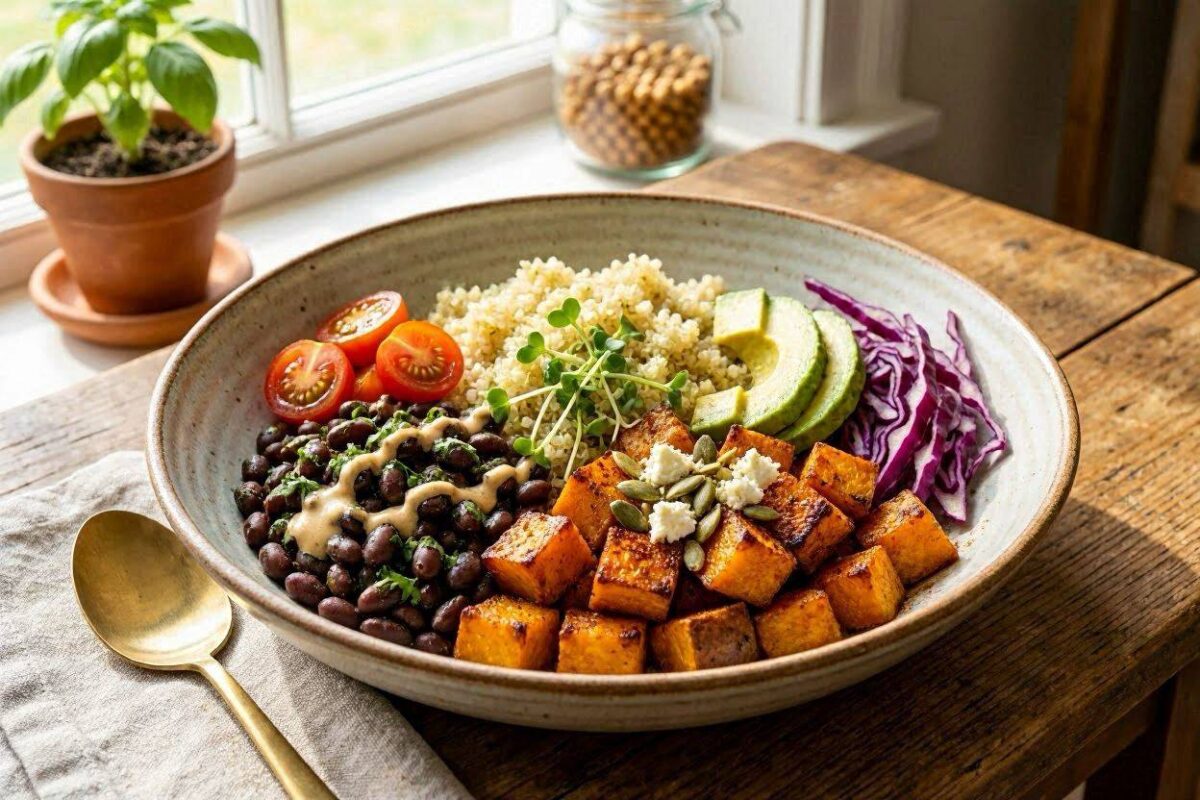
Last updated: July 20, 2026 · By Sarah, home cook and recipe developer
There’s a reason Buddha bowls became such a lasting trend rather than a passing fad: when done well, they manage to be filling, colorful, and genuinely nutritionally complete, all in one dish. Roasted sweet potato and black bean Buddha bowl is one of the most reliable versions of this format — a combination of roasted vegetables, plant-based protein, whole grains, and a flavorful sauce that comes together into something far more satisfying than the sum of its parts.
I started making this bowl regularly as a way to use up whatever grains and greens I had on hand without falling back on the same boring stir-fry every time. What surprised me was how much the roasting time for the sweet potatoes actually mattered — too short and they stayed starchy in the middle, too long and the edges burned before the centers were tender. The timing below is what’s worked consistently for me after a fair number of trial batches.
In this article, we’ll explore why sweet potatoes and black beans form such a nutritionally complete pairing, the reasoning behind the technique used, and a detailed, step-by-step method for building a Buddha bowl that holds up well for both dinner and meal prep.
Why Sweet Potatoes Are a Nutritional Standout
Sweet potatoes have earned their place as a staple in healthy eating circles, and for good reason — they bring a rare combination of natural sweetness and dense nutrition.
Exceptionally Rich in Beta-Carotene
Sweet potatoes are one of the richest dietary sources of beta-carotene, the plant compound the body converts into vitamin A. Vitamin A plays an essential role in immune function, vision, and skin health, and a single serving of roasted sweet potato can provide a substantial portion of the recommended daily intake.
A Good Source of Complex Carbohydrates and Fiber
Unlike refined starches, sweet potatoes provide complex carbohydrates alongside a meaningful amount of fiber, which slows digestion and helps maintain more stable blood sugar levels compared to simple starches like white rice or white bread.
Contains Potassium and Manganese
Sweet potatoes are a good source of potassium, an electrolyte important for healthy blood pressure regulation and muscle function, as well as manganese, a trace mineral involved in bone development and metabolism.
Why Black Beans Complete the Picture
Pairing sweet potatoes with black beans isn’t just a matter of flavor — it creates a nutritionally complementary combination that few single ingredients can achieve alone.
A Complete Amino Acid Profile When Paired with Grains
Black beans are rich in plant-based protein and fiber, but like most legumes, they’re relatively low in one particular essential amino acid, methionine. Pairing them with a whole grain like brown rice or quinoa — both of which are higher in methionine — creates a fuller amino acid profile across the meal, an approach that has long been used in plant-based diets around the world.
High in Fiber and Folate
Black beans are especially high in dietary fiber, supporting digestive health and contributing to a lasting feeling of fullness. They’re also a good source of folate, a B vitamin important for cell division and often highlighted in prenatal nutrition guidance.
Rich in Antioxidants
The dark pigment in black beans comes from anthocyanins, the same class of antioxidant compounds found in blueberries and other dark-colored produce, which have been studied for their potential role in reducing oxidative stress in the body.
Why Roasting and Layering Matter
Roasting the sweet potatoes at a high enough temperature allows their natural sugars to caramelize, creating a deeper flavor and slightly crisp exterior that steaming or boiling simply can’t replicate. Building the bowl in distinct layers — grain base, roasted vegetables, beans, fresh greens, and sauce — rather than mixing everything together beforehand also matters more than it might seem. It keeps each component’s texture intact and allows the eater to combine flavors with each bite as they choose, rather than everything becoming uniformly soft and homogenous.
Ingredients (Serves 4)
For the bowl:
- 2 large sweet potatoes, peeled and cubed
- 2 tablespoons olive oil, divided
- 1 teaspoon ground cumin
- 1/2 teaspoon smoked paprika
- Salt and black pepper, to taste
- 1 can (15 oz) black beans, drained and rinsed
- 2 cups cooked brown rice or quinoa
- 2 cups fresh spinach or mixed greens
- 1/2 cup shredded red cabbage (optional, for crunch)
- 1 avocado, sliced
- 2 tablespoons pumpkin seeds or sunflower seeds
For the tahini-lime dressing:
- 3 tablespoons tahini
- Juice of 1 lime
- 1 tablespoon olive oil
- 1 teaspoon honey or maple syrup
- 1 clove garlic, minced
- 2–4 tablespoons water, to thin
- Salt, to taste
Step-by-Step Preparation
Step 1: Roast the Sweet Potatoes
Preheat your oven to 425°F (220°C). Toss the cubed sweet potatoes with one tablespoon of olive oil, cumin, smoked paprika, salt, and pepper. Spread them in a single layer on a baking sheet, making sure the pieces aren’t touching, and roast for 25 to 30 minutes, flipping halfway through, until tender inside with caramelized, slightly crisp edges.
A note from testing this recipe: The first few times I made this, I crowded the sweet potatoes on the pan to save time, and they ended up steaming instead of roasting — soft all over but never getting that caramelized edge. Giving them enough space on the pan made a bigger difference than any seasoning change I tried.
Step 2: Warm the Black Beans
While the sweet potatoes roast, warm the drained and rinsed black beans in a small saucepan over medium-low heat with the remaining tablespoon of olive oil and a pinch of salt, just until heated through, about 5 minutes.
Step 3: Make the Dressing
In a small bowl, whisk together the tahini, lime juice, olive oil, honey or maple syrup, and minced garlic. Add water one tablespoon at a time, whisking until the dressing reaches a smooth, pourable consistency. Season with a pinch of salt to taste.
Step 4: Assemble the Bowls
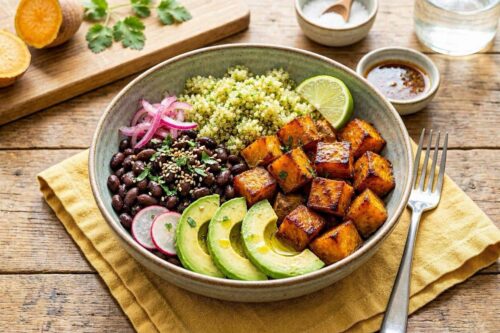
Divide the cooked brown rice or quinoa among four bowls as the base layer. Arrange the roasted sweet potatoes, warmed black beans, fresh greens, shredded cabbage, and sliced avocado in separate sections over the grain.
Step 5: Finish and Serve
Drizzle each bowl generously with the tahini-lime dressing and sprinkle with pumpkin or sunflower seeds for added crunch and healthy fats. Serve immediately while the sweet potatoes and beans are still warm.
Tips for Success
Cut the sweet potatoes evenly. Uniform cubes roast more consistently — aim for pieces around 3/4 inch so they cook through at the same rate.
Don’t overcrowd the roasting pan. Overcrowded vegetables release steam and end up soft rather than caramelized. Use two pans if needed rather than piling everything onto one.
Make components ahead for easy meal prep. The roasted sweet potatoes, cooked grain, and dressing can all be made up to four days in advance and stored separately, assembled fresh when ready to eat.
Thin the dressing as needed. Tahini thickens as it sits, especially once refrigerated. Whisk in a little extra water or lime juice to loosen it back up before serving leftovers.
Add extra protein if desired. For a more substantial meal, grilled chicken, baked tofu, or a fried egg all work well on top of this bowl without disrupting the flavor balance.
Serving Suggestions
This bowl is substantial enough to serve as a complete standalone meal, but it’s also easy to customize for different tastes or what’s in the fridge. Swap the black beans for chickpeas, the spinach for kale, or the brown rice for farro depending on preference. It travels well for packed lunches, as long as the dressing is stored separately and added just before eating to keep the greens from wilting.
Frequently Asked Questions
Can I meal-prep this bowl for the week? Yes — this is one of the easier meal-prep options, since each component holds up well individually. Store the grain, roasted sweet potatoes, and beans together, keep the greens and dressing separate, and assemble just before eating for the best texture.
What can I substitute for tahini if I don’t have any? A natural peanut butter or almond butter thinned with lime juice and water makes a good substitute, giving a similar creamy texture with a slightly different but still complementary flavor.
Is this recipe naturally vegan? Yes, as long as you use maple syrup instead of honey in the dressing. Every other ingredient in this bowl is plant-based.
How do I keep the sweet potatoes from getting mushy when reheating? Reheating in a skillet or oven rather than a microwave helps restore some of the crisp edges. A microwave will heat the sweet potatoes through but tends to leave them softer than they were freshly roasted.
About the author: Sarah is a home cook who develops and tests recipes focused on simple, wholesome ingredients. [You can expand this with relevant background — e.g., years of cooking experience, nutrition-related training or certifications, or a link to your recipe archive — to strengthen trust signals for readers and search engines.]
Final Thoughts
Roasted sweet potato and black bean Buddha bowl brings together everything a genuinely balanced meal needs — complex carbohydrates, plant-based protein, healthy fats, and a wide range of vitamins and antioxidants, all in one colorful, satisfying dish. It’s flexible enough to adapt to whatever grains, greens, or proteins you have on hand, making it one of those rare recipes that rarely feels repetitive even when it’s in regular rotation.