Layered Chocolate and Whipped Cream Trifle with Black Cherries: A Complete Guide to an Effortless, Impressive Dessert
July 21, 2026
🥧 Warm Classic American Apple Pie with Cinnamon and Roasted Almonds
July 21, 2026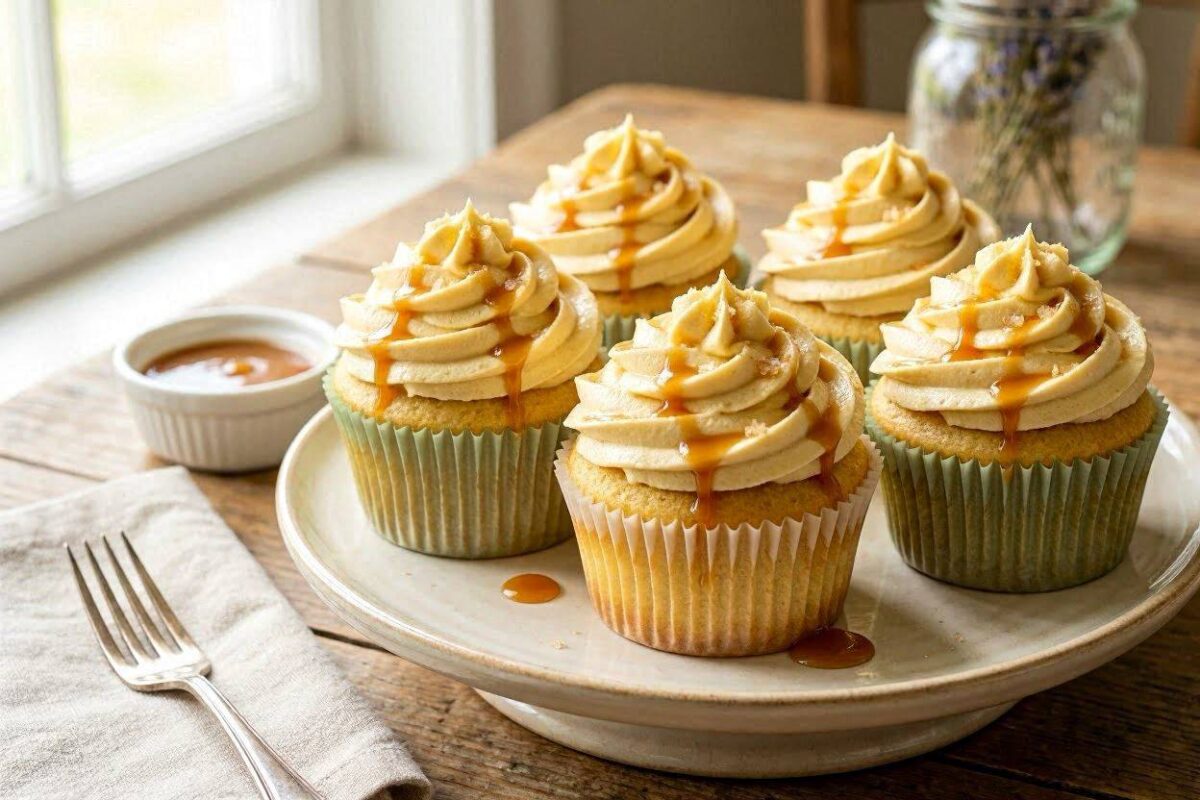
Last updated: July 20, 2026 · By Sarah, home cook and recipe developer
A truly good vanilla cupcake is harder to get right than it looks — too many home versions turn out dense, dry, or oddly dome-shaped instead of soft, tender, and level enough to frost neatly. Soft vanilla cupcakes with salted caramel buttercream frosting is the recipe I’ve landed on after enough trial and error to understand exactly where things typically go wrong, paired with a rich, not-too-sweet buttercream that makes these feel like something from a proper bakery case.
I spent longer than I’d like to admit troubleshooting cupcakes that sank in the middle or baked up unevenly domed. It turned out most of my issues came down to two things: overmixing the batter once the flour went in, and not measuring the batter evenly between liners. Small fixes, but they made the difference between cupcakes I was proud to serve and ones I quietly hid at the back of the plate.
In this article, we’ll look at the reasoning behind the cupcake batter and the salted caramel buttercream, common pitfalls at each stage, and a detailed, step-by-step method for consistently soft, level cupcakes with a well-balanced frosting.
Understanding the Two Components
This recipe comes down to two separate techniques — a properly mixed vanilla cake batter, and a caramel-based buttercream — each of which benefits from understanding why certain steps matter.
The Vanilla Cupcake Batter
Soft, tender cupcakes rely on creaming butter and sugar together thoroughly to incorporate air, which contributes to a light texture, followed by careful, minimal mixing once the flour is added. Overmixing at this stage develops the gluten in the flour, which is what leads to dense, tough cupcakes rather than a soft, tender crumb. Room-temperature ingredients — butter, eggs, and milk — also matter here, since they combine more evenly than cold ingredients, helping the batter emulsify properly rather than curdling or separating.
The Salted Caramel Buttercream
This buttercream starts with a homemade caramel sauce, cooled and then beaten into a base of softened butter and powdered sugar. The caramel provides both flavor and a slightly softer, silkier texture compared to a plain vanilla buttercream, while a pinch of flaky salt balances the sweetness and keeps the frosting from tasting one-dimensional.
Why Room-Temperature Ingredients and Gentle Mixing Matter
Baking, more than most cooking, rewards attention to small details that can feel unnecessary in the moment. Room-temperature butter and eggs combine more smoothly into a batter, cold caramel prevents a buttercream from becoming greasy or separated, and minimal mixing once flour is added is the single most reliable way to avoid tough, dense cupcakes. These small habits, more than any specific ingredient, are what separate consistently good cupcakes from inconsistent ones.
Ingredients (Makes 12 cupcakes)
For the cupcakes:
- 1 1/2 cups all-purpose flour
- 1 1/2 teaspoons baking powder
- 1/4 teaspoon salt
- 1/2 cup unsalted butter, softened
- 1 cup granulated sugar
- 2 large eggs, at room temperature
- 2 teaspoons vanilla extract
- 1/2 cup whole milk, at room temperature
For the salted caramel:
- 1/2 cup granulated sugar
- 3 tablespoons unsalted butter, cubed, at room temperature
- 1/4 cup heavy cream, warmed
- 1/2 teaspoon flaky sea salt
For the buttercream:
- 1 cup unsalted butter, softened
- 3 cups powdered sugar
- Pinch of salt
- 1–2 tablespoons heavy cream, as needed
Step-by-Step Preparation
Step 1: Prepare the Batter Base
Preheat your oven to 350°F (175°C) and line a muffin tin with cupcake liners. In a bowl, whisk together the flour, baking powder, and salt, and set aside.
Step 2: Cream the Butter and Sugar
In a large bowl, beat the softened butter and sugar together on medium speed for about 3 minutes, until noticeably lighter in color and fluffy in texture. This step incorporates air into the batter, which contributes to a lighter final crumb.
Step 3: Add Eggs and Vanilla
Add the eggs one at a time, beating well after each addition, then mix in the vanilla extract.
Step 4: Alternate Dry Ingredients and Milk
Add the flour mixture in three additions, alternating with the milk in two additions, beginning and ending with the flour. Mix on low speed just until each addition is incorporated, being careful not to overmix once the flour has been added.
A note from testing this recipe: Early on, I kept mixing well past the point the batter looked combined, assuming more mixing meant a smoother result. It actually did the opposite — the cupcakes came out noticeably denser and slightly tough. Stopping the moment the last streaks of flour disappear made a real difference in the final texture.
Step 5: Bake the Cupcakes
Divide the batter evenly among the cupcake liners, filling each about two-thirds full. Bake for 18 to 20 minutes, until a toothpick inserted into the center comes out clean. Let the cupcakes cool in the tin for 5 minutes before transferring to a wire rack to cool completely.
Step 6: Make the Caramel
In a saucepan, heat the sugar over medium heat without stirring, swirling occasionally, until it melts into a deep amber liquid. Remove from heat and carefully whisk in the butter, followed by the warmed heavy cream and flaky salt. Let the caramel cool to room temperature before using in the buttercream.
Step 7: Make the Buttercream
Beat the softened butter until smooth and pale, then gradually add the powdered sugar, mixing on low speed to avoid a sugar cloud. Add the cooled caramel and a pinch of salt, and beat until fully combined and fluffy. Add heavy cream, a tablespoon at a time, until the frosting reaches a smooth, pipeable consistency.
Step 8: Frost the Cupcakes
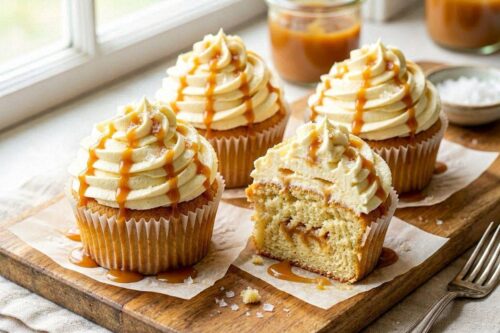
Once the cupcakes have cooled completely, pipe or spread the salted caramel buttercream over each one. Finish with an extra drizzle of caramel and a small pinch of flaky salt, if desired.
Tips for Success
Use room-temperature ingredients. Cold butter, eggs, or milk can cause the batter to clump or not mix evenly, affecting the final texture.
Don’t overmix after adding the flour. This is the most common reason cupcakes end up dense instead of soft and fluffy.
Cool the caramel completely before making the buttercream frosting. Adding warm caramel to butter will cause it to melt and form a separate creamy frosting.
Divide the batter evenly in the cupcake liners. Using a springform scoop or a measuring cup to divide the batter helps ensure even and uniformly sized cupcakes.
Only decorate the cupcakes after they have cooled completely. Decorating warm cupcakes will cause the buttercream to melt and run instead of holding its shape.
Serving Suggestions
These cupcakes are rich enough to serve on their own for any celebration or gathering, though a small extra drizzle of caramel sauce over the top makes for an especially eye-catching presentation. They pair nicely with coffee or tea, and hold up well for a day or two at room temperature in an airtight container, making them a practical option for parties or bake sales.
Frequently Asked Questions
Why did my cupcakes sink in the middle after baking? This is often caused by underbaking, opening the oven door too early, or overmixing the batter, which can weaken its structure. Testing with a toothpick and avoiding early oven checks usually solves this.
Can I make the caramel and buttercream ahead of time? Yes — the caramel can be made a few days in advance and stored in the refrigerator, and the finished buttercream can be made a day ahead, though it should be brought back to room temperature and re-whipped briefly before frosting.
Why did my buttercream turn out greasy or separated? This is usually caused by adding warm caramel or overly soft butter, or by overbeating the frosting for too long. Chilling the caramel and butter appropriately beforehand typically resolves this.
How should I store leftover frosted cupcakes? Store them in an airtight container at room temperature for up to two days, or in the refrigerator for up to five days, bringing them back to room temperature before serving for the best texture.
About the author: Sarah is a home cook who develops and tests recipes focused on simple, wholesome ingredients. [You can expand this with relevant background — e.g., years of baking experience, pastry training, or a link to your recipe archive — to strengthen trust signals for readers and search engines.]
Final Thoughts
Soft vanilla cupcakes with salted caramel buttercream frosting show that a truly great cupcake comes down to a handful of small, learnable habits — creaming properly, mixing gently once flour is added, and letting each component cool before combining. With a tender, soft crumb and a rich, perfectly balanced caramel frosting, these cupcakes deliver a genuinely bakery-quality result worth the small extra attention to detail.