Turmeric Ginger Grilled Tofu with Stir-Fried Greens: A Complete Guide to a Bold, Plant-Based Dinner
July 20, 2026
Zucchini Noodle Pasta with Fresh Basil Pesto and Cherry Tomatoes: A Complete Guide to a Light, Low-Carb Favorite
July 20, 2026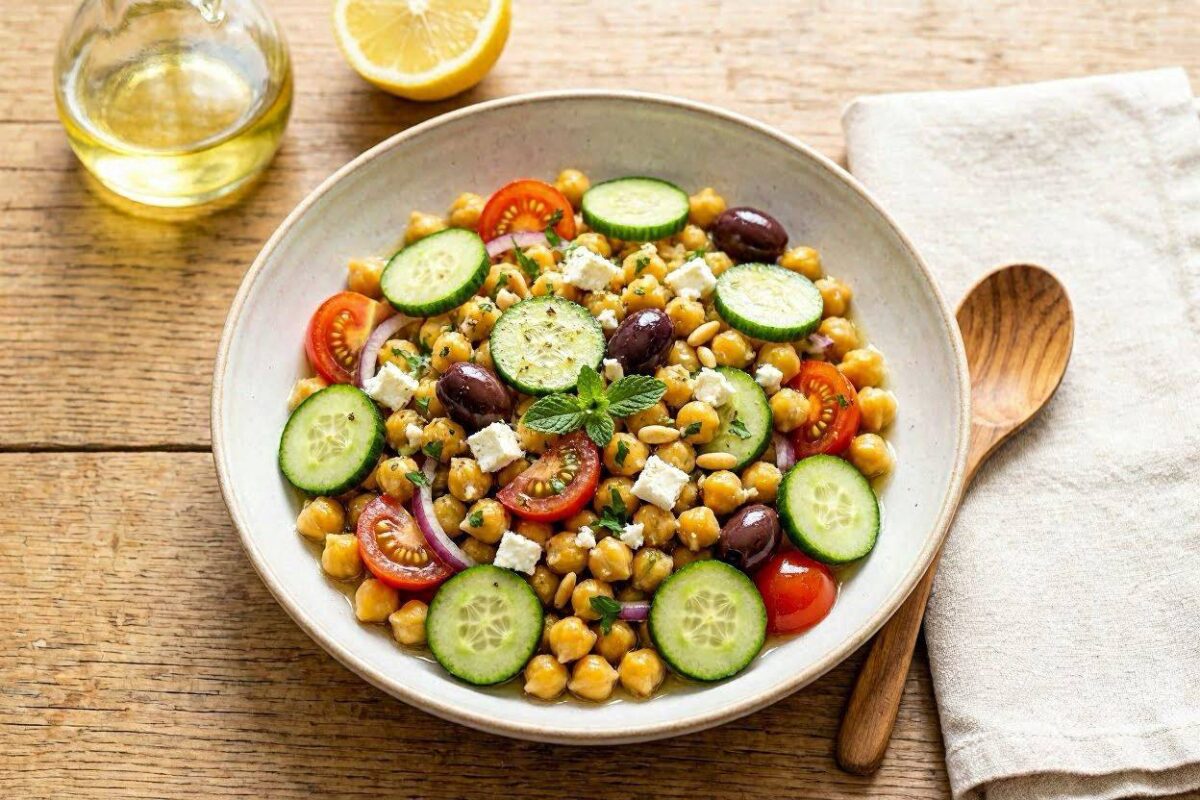
Last updated: July 23, 2026 · By Sarah, home cook and recipe developer
Some salads feel like an afterthought, and others feel like a meal in their own right. Mediterranean chickpea and cucumber salad with lemon vinaigrette belongs firmly in the second category — crisp vegetables, hearty chickpeas, briny olives, and a bright, tangy dressing come together into something substantial enough to eat on its own, yet light enough to serve as a side to nearly anything.
I started making this salad as a way to have something ready in the fridge that I could eat straight from the container without any reheating, especially during warmer months when the idea of a hot meal feels unappealing. What I didn’t expect was how much better it tasted after sitting for an hour or two, once the vegetables had a chance to soak up some of the vinaigrette. It’s become one of the few salads I actually look forward to eating rather than just tolerate.
In this article, we’ll look at why chickpeas and fresh vegetables make such a well-rounded nutritional pairing, the reasoning behind the technique used, and a detailed, step-by-step method for building a salad that holds up well over a few days.
Why Chickpeas Are a Nutritional Cornerstone of Mediterranean Eating
Chickpeas have been a staple of Mediterranean and Middle Eastern cuisine for thousands of years, and their nutritional profile explains why they’ve stood the test of time.
A Strong Plant-Based Protein and Fiber Source
Chickpeas provide a substantial amount of plant-based protein alongside a significant dose of dietary fiber, a combination that supports lasting fullness and helps stabilize blood sugar levels after a meal. This makes chickpea-based dishes a popular choice for anyone managing weight, blood sugar, or simply looking to reduce their reliance on animal protein.
Rich in Folate and Manganese
Chickpeas are a good source of folate, an essential B vitamin involved in cell division, along with manganese, a trace mineral that supports bone health and metabolic function.
Supports Heart Health
The soluble fiber found in chickpeas has been associated with modest reductions in LDL cholesterol when consumed as part of a balanced diet, making them a reasonable addition to a heart-conscious eating pattern.
The Role of Fresh Vegetables
Cucumber, tomatoes, and red onion bring crunch, moisture, and brightness to balance the heartier chickpeas.
- Cucumber is largely composed of water, making it naturally hydrating, while still providing a modest amount of vitamin K and antioxidants.
- Tomatoes are rich in vitamin C and lycopene, an antioxidant compound that has been studied for its potential role in heart health.
- Red onion contributes quercetin, a flavonoid antioxidant with anti-inflammatory properties, along with a sharp bite that mellows once mixed with the dressing.
- Kalamata olives add healthy monounsaturated fats along with a distinctly briny depth of flavor characteristic of Mediterranean cooking.
Why Lemon Vinaigrette Ties It Together
A simple lemon vinaigrette made with olive oil, fresh lemon juice, garlic, and oregano does more than add flavor — the acidity from the lemon juice helps to slightly soften the raw onion and balance the richness of the olive oil and feta, while the oil itself helps the body absorb fat-soluble nutrients like the lycopene found in tomatoes. Making the vinaigrette fresh, rather than relying on a bottled dressing, also allows you to control the balance of acidity and richness far more precisely.
Why Letting the Salad Rest Matters
Unlike leafy green salads that wilt quickly once dressed, this chickpea-based salad actually benefits from resting in the refrigerator for an hour or more before serving. The sturdy vegetables and legumes hold their texture well, while the dressing has time to penetrate the chickpeas and soften the onion slightly, resulting in a more cohesive, flavorful salad rather than one that tastes like separate components tossed together at the last minute.
Ingredients (Serves 4)
For the salad:
- 2 cans (15 oz each) chickpeas, drained and rinsed
- 1 large cucumber, diced
- 1 pint cherry tomatoes, halved
- 1/2 red onion, thinly sliced
- 1/2 cup Kalamata olives, pitted and halved
- 1/2 cup crumbled feta cheese
- 1/4 cup fresh parsley, chopped
- 2 tablespoons fresh mint, chopped (optional)
For the lemon vinaigrette:
- 1/4 cup extra virgin olive oil
- Juice of 1 large lemon
- 1 clove garlic, minced
- 1 teaspoon dried oregano
- 1/2 teaspoon Dijon mustard
- Salt and black pepper, to taste
Step-by-Step Preparation
Step 1: Prepare the Vegetables
Dice the cucumber, halve the cherry tomatoes, and thinly slice the red onion. Combine them in a large mixing bowl along with the drained and rinsed chickpeas.
A note from testing this recipe: The first time I made this, I skipped rinsing the chickpeas thoroughly, and the salad ended up with a slightly canned, starchy taste in the dressing. A good rinse under cold water removes that aquafaba residue and lets the fresh lemon flavor come through much more clearly.
Step 2: Make the Vinaigrette
In a small bowl or jar, whisk together the olive oil, lemon juice, minced garlic, dried oregano, and Dijon mustard. Season with salt and pepper to taste. If using a jar, simply seal it and shake vigorously until well combined.
Step 3: Dress the Salad
Pour the vinaigrette over the chickpea and vegetable mixture, then add the Kalamata olives and toss everything together thoroughly, making sure the dressing coats all the ingredients evenly.
Step 4: Add the Finishing Touches
Gently fold in the crumbled feta cheese, chopped parsley, and fresh mint, if using, being careful not to break up the feta too much as you mix.
Step 5: Let It Rest
For the best flavor, let the salad sit in the refrigerator for at least 30 minutes, and up to a few hours, before serving. This resting period allows the flavors to meld and the vegetables to absorb some of the vinaigrette.
Step 6: Serve
Give the salad a final toss before serving, and taste to adjust the seasoning, adding an extra squeeze of lemon juice or a pinch of salt if needed.
Tips for Success
Rinse the chickpeas thoroughly. This small step removes the slightly starchy liquid they’re packed in and results in a cleaner, brighter overall flavor.
Make the vinaigrette fresh each time. It takes only a couple of minutes and makes a noticeable difference compared to bottled dressings, which often taste flatter or overly acidic.
Let it rest before serving. Unlike leafy salads, this one genuinely improves with a little time in the refrigerator, so it’s a great option to make a few hours ahead of when you plan to eat it.
Adjust the saltiness. Feta and olives both bring a fair amount of saltiness on their own, so it’s worth tasting before adding extra salt to the vinaigrette.
Store dressing separately for large batches. If making a big batch to eat over several days, consider keeping some vinaigrette separate to refresh the salad partway through the week, since the cucumbers can release water over time.
Serving Suggestions
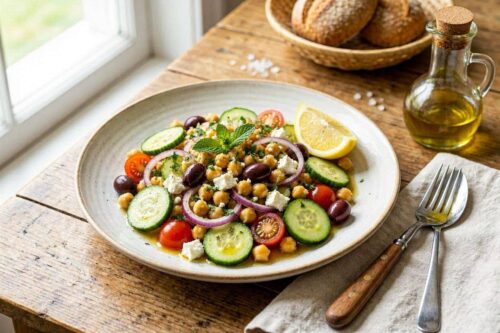
This salad works beautifully as a light lunch on its own, or as a side dish alongside grilled chicken, fish, or lamb kebabs. It also makes an excellent addition to a larger Mediterranean-style spread, served alongside hummus, pita bread, and grilled vegetables. For a more substantial meal, serve it over a bed of cooked quinoa or alongside warm pita for scooping.
Frequently Asked Questions
How long does this salad keep in the refrigerator? It will keep for up to three days. However, the cucumbers will gradually release some water, which may make the salad a little less crunchy by the third day. Draining the excess liquid before serving will help maintain its texture.
Can I make this salad ahead of time for a party? Yes, it’s actually a great dish to make ahead of time, as it tastes even better after a few hours. Just wait until just before serving if you’re making it more than a day ahead.
Is there a dairy-free version of this recipe? Yes, simply omit the feta cheese or substitute a vegan alternative. The salad will still be nutritionally sound and taste great without it.
Can I add a protein source to make it more substantial? You can add grilled chicken, shrimp, or even canned tuna to this salad for extra protein without compromising its Mediterranean flavor.
About the author: Sarah is a home cook who develops and tests recipes focused on simple, wholesome ingredients. [You can expand this with relevant background — e.g., years of cooking experience, nutrition-related training or certifications, or a link to your recipe archive — to strengthen trust signals for readers and search engines.]
Final Thoughts
Mediterranean chickpea and cucumber salad with lemon vinaigrette proves that a simple, no-cook dish can still be deeply satisfying and nutritionally complete. With plant-based protein, fiber, healthy fats, and a wide range of vitamins from fresh vegetables, this salad holds its own as either a light meal or a supporting side dish. Its ability to improve with time in the refrigerator makes it a genuinely practical choice for meal prep, entertaining, or simply having something reliably good ready to eat throughout the week.