Mediterranean Chickpea and Cucumber Salad with Lemon Vinaigrette: A Complete Guide to a Refreshing, Protein-Packed Salad
July 20, 2026
Herb-Roasted Chicken Thighs with Roasted Cauliflower Rice: A Complete Guide to a Juicy, Low-Carb Dinner
July 20, 2026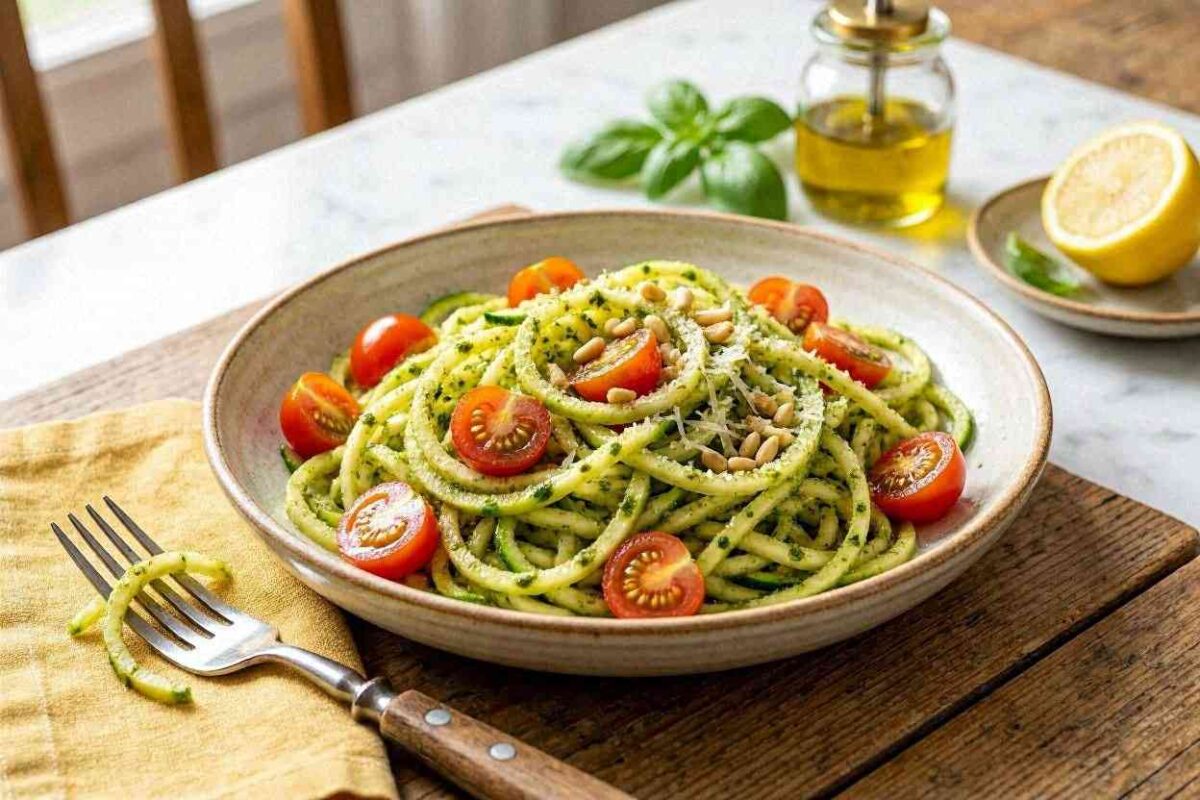
Last updated: July 20, 2026 · By Sarah, home cook and recipe developer
There’s a particular satisfaction in a dish that manages to feel indulgent while actually being made almost entirely of vegetables. Zucchini noodle pasta with fresh basil pesto and cherry tomatoes is exactly that kind of recipe — bright, herby, and satisfying in a way that rarely leaves you missing traditional pasta, despite being a fraction of the carbohydrates.
I started making “zoodles” during a stretch when I was trying to cut back on refined carbs without giving up the foods I actually enjoyed eating. My first few attempts were disappointing — watery, limp noodles that tasted more like boiled squash than pasta. The fix turned out to be almost embarrassingly simple: salting the zucchini briefly to draw out excess moisture before cooking, and never cooking it a moment longer than necessary. This is the version that finally got the texture right.
In this article, we’ll explore why zucchini noodles and fresh pesto make such a nutritionally solid pairing, the reasoning behind the technique used, and a detailed, step-by-step method for getting noodles with real bite rather than a soggy, watery result.
Why Zucchini Noodles Are Worth the Swap
Zucchini noodles, often called “zoodles,” have become a popular low-carb alternative to traditional pasta, and the nutritional case behind the trend holds up well.
Dramatically Lower in Carbohydrates and Calories
A serving of zucchini noodles contains a small fraction of the carbohydrates and calories found in an equivalent portion of traditional wheat pasta, while still providing enough volume and texture to feel satisfying. This makes it a popular choice for anyone following a low-carb, ketogenic, or calorie-conscious eating pattern.
A Good Source of Vitamin C and Potassium
Zucchini provides a meaningful amount of vitamin C, an antioxidant vitamin important for immune function and skin health, along with potassium, an electrolyte that supports healthy blood pressure regulation.
High Water Content Supports Hydration
Zucchini is composed largely of water, which contributes to a naturally hydrating, light quality that makes this dish feel refreshing rather than heavy, particularly during warmer months.
Why Fresh Basil Pesto Adds More Than Flavor
Traditional basil pesto brings together several ingredients that each carry their own nutritional value alongside their contribution to flavor.
- Fresh basil contains antioxidant compounds, including flavonoids, along with a modest amount of vitamin K.
- Pine nuts (or walnuts, a common substitute) provide healthy unsaturated fats along with a small amount of plant-based protein.
- Olive oil contributes monounsaturated fats and polyphenols, the same beneficial compounds found in olive oil used elsewhere in Mediterranean cooking.
- Parmesan cheese adds calcium and a concentrated, savory depth of flavor, even in relatively small amounts.
- Cherry tomatoes round out the dish with vitamin C and lycopene, an antioxidant compound associated with heart health benefits.
Because pesto is uncooked, it retains the full nutritional value of its fresh ingredients, particularly the more heat-sensitive compounds in fresh basil and olive oil that can degrade somewhat with prolonged cooking.
Why Salting the Zucchini Matters
Zucchini’s high water content, which makes it nutritionally light, is also exactly what causes the common complaint of watery, soggy zucchini noodles. Salting the noodles briefly before cooking draws out a portion of that excess moisture through osmosis, resulting in a firmer noodle that holds its texture much better once combined with the pesto. Skipping this step is the single most common reason zucchini noodles turn out disappointing.
Ingredients (Serves 4)
For the zucchini noodles:
- 4 medium zucchini, spiralized into noodles
- 1 teaspoon salt (for drawing out moisture)
- 1 tablespoon olive oil
- 1 pint cherry tomatoes, halved
- 2 cloves garlic, minced
- Salt and black pepper, to taste
For the basil pesto:
- 2 cups fresh basil leaves, packed
- 1/3 cup pine nuts (or walnuts)
- 2 cloves garlic
- 1/2 cup grated Parmesan cheese
- 1/2 cup extra virgin olive oil
- Juice of 1/2 lemon
- Salt and black pepper, to taste
Step-by-Step Preparation
Step 1: Salt the Zucchini Noodles
Spiralize the zucchini into noodles and place them in a colander set over a bowl or in the sink. Sprinkle with the teaspoon of salt, toss gently, and let sit for 15 to 20 minutes to draw out excess moisture. Pat the noodles dry with paper towels or a clean kitchen towel afterward.
A note from testing this recipe: This step felt unnecessary the first time I tried it, and skipping it was exactly why my early attempts turned out watery. Once I started salting and drying the noodles properly, the texture improved dramatically — genuinely the biggest single fix for this dish.
Step 2: Make the Pesto
In a food processor, combine the basil, pine nuts, and garlic, and pulse until finely chopped. With the processor running, slowly stream in the olive oil until the mixture becomes a smooth, thick sauce. Transfer to a bowl and stir in the grated Parmesan and lemon juice. Season with salt and pepper to taste.
Step 3: Cook the Cherry Tomatoes
In a large skillet, heat the olive oil over medium heat. Add the minced garlic and cook for about 30 seconds until fragrant, then add the halved cherry tomatoes and cook for 3 to 4 minutes, just until they begin to soften and release some of their juices.
Step 4: Cook the Zucchini Noodles
Add the salted and dried zucchini noodles to the skillet with the tomatoes. Toss gently and cook for only 2 to 3 minutes — just enough to warm through and soften slightly while still retaining some bite. Overcooking at this stage is the most common way to end up with mushy noodles.
Step 5: Combine with Pesto
Remove the skillet from heat and stir in the fresh basil pesto, tossing gently until the noodles and tomatoes are evenly coated.
Step 6: Serve
Serve immediately, finished with an extra sprinkle of Parmesan cheese and a few fresh basil leaves for garnish.
Tips for Success
Don’t skip salting the zucchini. This step alone determines whether the final dish has a pleasant bite or turns watery and limp.
Cook the noodles briefly, off heat if needed. Zucchini noodles continue to soften even after being removed from heat, so it’s often better to slightly undercook them than to leave them on the stove too long.
Make the pesto ahead. Pesto keeps well in the refrigerator for up to five days if a thin layer of olive oil is poured over the top to prevent browning, making it easy to prepare in advance.
Use a spiralizer or julienne peeler. Both tools work well for creating zucchini noodles; a julienne peeler is a reasonable option if you don’t have a dedicated spiralizer.
Serve immediately for the best texture. Unlike traditional pasta, zucchini noodles don’t hold up well as leftovers, since they continue to release water as they sit — it’s best to make only what you plan to eat right away.
Serving Suggestions
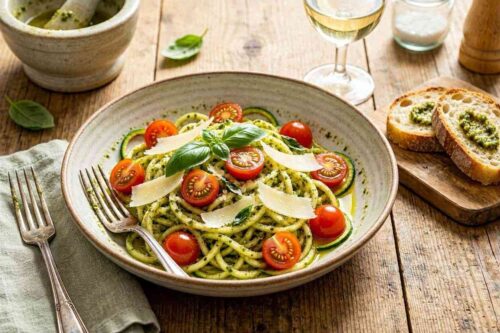
This dish works beautifully as a light main course on its own, or as a side to grilled chicken, shrimp, or salmon for added protein. For a heartier meal, it can be tossed with cooked chickpeas or white beans. It also makes an appealing option for anyone hosting a low-carb-friendly dinner, since it looks and feels like a full pasta dish without the heaviness.
Frequently Asked Questions
Can I make pesto without pine nuts? Yes, you can use walnuts, almonds, or even sunflower seeds as substitutes. Each adds a slightly different flavor, but the same creamy texture when combined with the other ingredients.
Why do my zucchini noodles become runny? This is often due to not adding salt, cooking the noodles for too long, or not draining them properly before cooking. These three steps work together to maintain the final noodle texture.
Can I make this dish ahead of time? This isn’t ideal, as zucchini noodles release water over time and lose their texture. If you need to make it ahead, store the pesto and cooked tomatoes separately, and cook the zucchini noodles fresh just before serving.
Is there a dairy-free pesto? Yes – you can omit the Parmesan cheese or substitute a vegan alternative, or you can use a tablespoon of nutritional yeast for a similarly delicious flavor.
About the author: Sarah is a home cook who develops and tests recipes focused on simple, wholesome ingredients. [You can expand this with relevant background — e.g., years of cooking experience, nutrition-related training or certifications, or a link to your recipe archive — to strengthen trust signals for readers and search engines.]
Final Thoughts
Zucchini noodle pasta with fresh basil pesto and cherry tomatoes proves that cutting back on refined carbohydrates doesn’t have to mean sacrificing flavor or satisfaction. With the right technique — particularly salting the zucchini and cooking it only briefly — this dish delivers a genuinely satisfying, low-carb alternative to traditional pasta, loaded with fresh herbs, healthy fats, and bright, seasonal flavor.