
Zucchini Noodle Pasta with Fresh Basil Pesto and Cherry Tomatoes: A Complete Guide to a Light, Low-Carb Favorite
July 20, 2026
Classic Dark Chocolate Tart with Salted Butter Caramel: A Complete Guide to an Elegant, Show-Stopping Dessert
July 20, 2026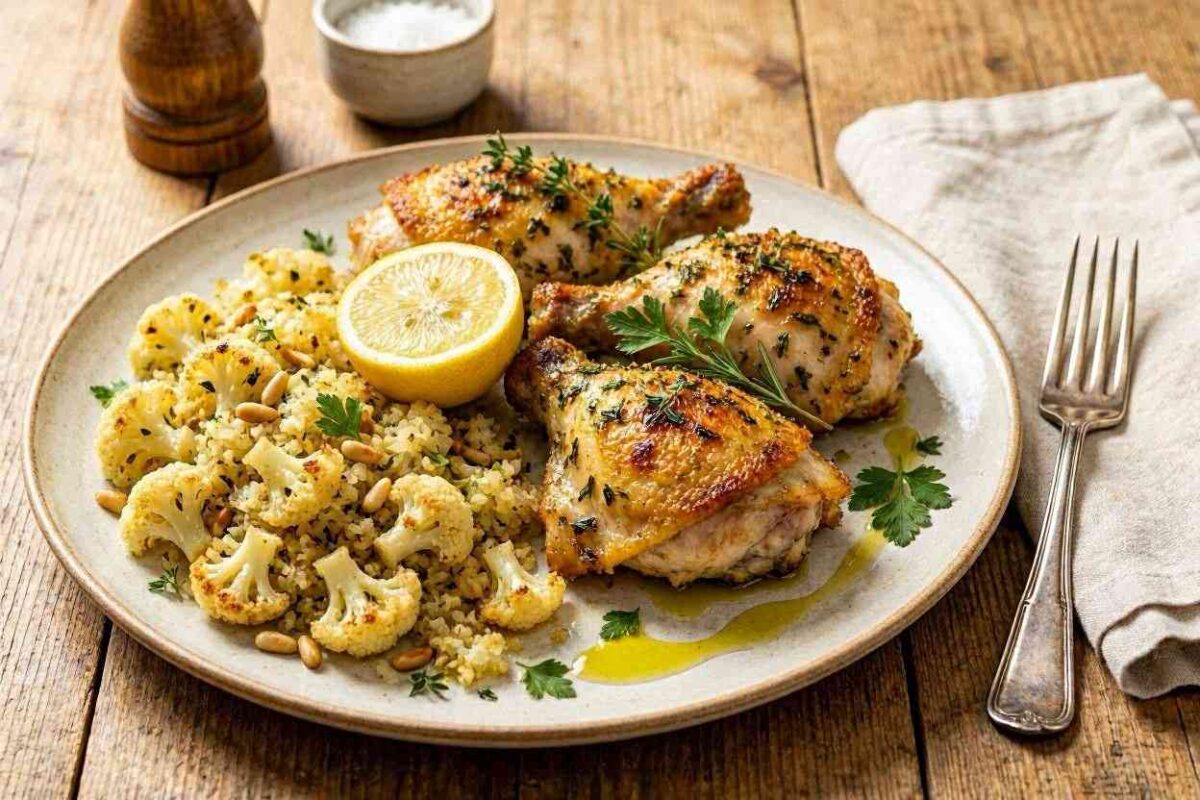
Last updated: July 20, 2026 · By Sarah, home cook and recipe developer
Chicken breast tends to get all the attention in healthy eating circles, but chicken thighs deserve just as much credit — arguably more, when it comes to flavor and forgiveness in the kitchen. Herb-roasted chicken thighs with roasted cauliflower rice takes advantage of that extra richness, pairing crispy-skinned, herb-seasoned thighs with a light, low-carb side that soaks up all the pan juices.
I switched to cooking thighs instead of breasts a while back, mostly out of frustration with how easily breasts dry out on a busy weeknight when I’m not watching the clock closely. Thighs are simply more forgiving — the higher fat content keeps them juicy even with a few extra minutes in the oven, which matters a lot on nights when dinner isn’t the only thing I’m managing. The cauliflower rice came later, as a way to round out the meal without leaning on regular rice or potatoes every time.
In this article, we’ll look at why chicken thighs and cauliflower make a nutritionally solid, satisfying pairing, the reasoning behind the roasting technique used, and a detailed, step-by-step method for getting crispy skin and tender, well-seasoned cauliflower rice every time.
Why Chicken Thighs Hold Their Own Nutritionally
Chicken thighs have a reputation for being less “diet-friendly” than breasts, but the reality is more nuanced, and their nutritional profile still fits comfortably into a balanced diet.
Rich in Protein, with More Flavor-Carrying Fat
Chicken thighs provide a similar amount of protein per serving as chicken breast, with a somewhat higher fat content that contributes to their richer flavor and juicier texture. For most people, this additional fat — largely unsaturated — fits reasonably within a balanced diet, particularly when the skin is left on for roasting and the dish is built around vegetables rather than heavy sides.
A Good Source of Iron and Zinc
Dark meat chicken, including thighs, tends to be higher in iron and zinc compared to white meat, two minerals important for immune function and oxygen transport in the blood.
More Forgiving to Cook
Because of their higher fat content, chicken thighs are considerably more resistant to drying out than chicken breast, even with a few extra minutes in the oven. This makes them a practical, lower-stress option for weeknight cooking, especially when multitasking with a side dish.
Why Cauliflower Rice Is a Smart Substitute
Cauliflower rice has become a popular stand-in for traditional grains, and the nutritional reasoning behind it holds up well.
Dramatically Lower in Carbohydrates
A serving of cauliflower rice contains a small fraction of the carbohydrates found in an equivalent portion of white or brown rice, making it a popular choice for anyone following a low-carb or ketogenic eating pattern, or simply looking to add more vegetables to their plate.
Rich in Vitamin C and Fiber
Cauliflower is a good source of vitamin C, along with a modest amount of fiber, both of which are largely absent from traditional white rice.
Contains Sulforaphane
Cauliflower, like other cruciferous vegetables, contains compounds such as sulforaphane, which have been studied for their potential antioxidant properties.
Why Roasting Both Together Matters
Roasting the chicken thighs and cauliflower rice using similar high-heat techniques allows both components to develop deeper flavor through browning, while the rendered fat and juices from the chicken can be used to season the cauliflower rice, tying the whole dish together. Roasting the cauliflower rice, rather than steaming or microwaving it, also helps evaporate some of its naturally high moisture content, preventing the mushy, watery texture that’s a common complaint with this substitute.
Ingredients (Serves 4)
For the chicken:
- 8 bone-in, skin-on chicken thighs
- 2 tablespoons olive oil
- 3 cloves garlic, minced
- 1 tablespoon fresh rosemary, chopped
- 1 tablespoon fresh thyme leaves
- 1 teaspoon smoked paprika
- Salt and black pepper, to taste
- 1 lemon, halved
For the cauliflower rice:
- 1 large head cauliflower, riced (or 4 cups pre-riced cauliflower)
- 2 tablespoons olive oil
- 1/2 onion, finely diced
- 2 cloves garlic, minced
- Salt and black pepper, to taste
- Fresh parsley, chopped, for garnish
Step-by-Step Preparation
Step 1: Season the Chicken Thighs
Preheat your oven to 425°F (220°C). Pat the chicken thighs dry with paper towels — this step is important for achieving crispy skin, since excess moisture on the surface prevents proper browning. In a small bowl, combine the olive oil, minced garlic, rosemary, thyme, smoked paprika, salt, and pepper. Rub this mixture evenly over and under the skin of each thigh.
A note from testing this recipe: I used to season the chicken straight from the package without drying it first, and the skin never crisped up the way I wanted, no matter how high I set the oven. Taking an extra minute to pat the thighs thoroughly dry made a bigger difference to the final texture than any change to the seasoning.
Step 2: Roast the Chicken
Arrange the chicken thighs skin-side up on a baking sheet, along with the halved lemon. Roast for 35 to 40 minutes, until the skin is golden and crisp and the internal temperature reaches 165°F (74°C) when checked with a meat thermometer.
Step 3: Rice the Cauliflower
While the chicken roasts, cut the cauliflower into florets and pulse in a food processor in batches until it reaches a rice-like consistency, being careful not to over-process it into a paste. If using pre-riced cauliflower, this step can be skipped.
Step 4: Sauté the Cauliflower Rice
In a large skillet, heat the olive oil over medium heat. Add the diced onion and cook for about 4 minutes until softened, then add the minced garlic and cook for another minute until fragrant. Add the riced cauliflower and cook for 6 to 8 minutes, stirring occasionally, until tender and any excess moisture has evaporated. Season with salt and pepper to taste.
Step 5: Rest and Finish the Chicken
Once the chicken is done roasting, let it rest for about 5 minutes before serving. Squeeze the juice from the roasted lemon halves over the chicken for a bright, caramelized citrus flavor.
Step 6: Plate and Serve
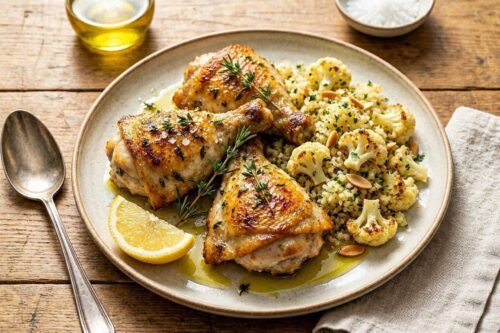
Serve the herb-roasted chicken thighs over or alongside the cauliflower rice, spooning any pan juices from the baking sheet over the top. Garnish with fresh chopped parsley.
Tips for Success
Dry the chicken skin thoroughly. This single step has the biggest impact on how crispy the skin turns out, more so than oven temperature or seasoning.
Don’t overcrowd the pan. Giving the chicken thighs enough space allows heat to circulate evenly and helps the skin crisp rather than steam.
Squeeze out excess moisture from riced cauliflower. If using pre-riced cauliflower from the store, it can sometimes be quite wet — patting it dry with a towel before cooking helps it sauté rather than steam.
Use a meat thermometer for the chicken. Because thigh meat is more forgiving than breast, it’s tempting to guess doneness, but a thermometer still ensures consistent, safe results every time.
Save the pan juices. The rendered fat and juices left on the baking sheet after roasting the chicken are full of flavor and can be spooned over the cauliflower rice for extra richness.
Serving Suggestions
This dish is satisfying enough to serve entirely on its own, given the protein from the chicken and the volume from the cauliflower rice. For a lighter accompaniment, a simple green salad with a light vinaigrette pairs well and adds some fresh crunch. It also works nicely for meal prep, though the chicken skin is best enjoyed fresh, since it loses some crispness after refrigeration and reheating.
Frequently Asked Questions
Can I use boneless, skinless chicken thighs instead? Yes, though the cooking time will be shorter — closer to 20 to 25 minutes — and you’ll miss out on the crispy skin, though the meat itself will still be flavorful and juicy.
Why does my cauliflower rice turn out mushy? This is usually caused by not draining or cooking off enough moisture, either from over-processing the cauliflower into very fine pieces or from not cooking it long enough in the skillet to evaporate excess water.
Can I make the cauliflower rice ahead of time? Yes, though it’s best reheated in a skillet rather than a microwave, since reheating on the stovetop helps re-evaporate any moisture that’s accumulated during storage.
Is this recipe suitable for a low-carb or keto diet? Yes, as written, this dish is naturally low in carbohydrates, relying on cauliflower rather than grains for its starchy component.
About the author: Sarah is a home cook who develops and tests recipes focused on simple, wholesome ingredients. [You can expand this with relevant background — e.g., years of cooking experience, nutrition-related training or certifications, or a link to your recipe archive — to strengthen trust signals for readers and search engines.]
Final Thoughts
Herb-roasted chicken thighs with roasted cauliflower rice shows that a low-carb dinner doesn’t have to feel restrictive or bland. With crispy, well-seasoned chicken skin and a hearty, flavorful cauliflower rice that soaks up all the roasting juices, this dish delivers a genuinely satisfying, protein-rich meal that comes together with minimal hands-on effort, making it a reliable option for busy weeknights.