
Classic Dark Chocolate Tart with Salted Butter Caramel: A Complete Guide to an Elegant, Show-Stopping Dessert
July 20, 2026
Traditional French Eclair with Rich Vanilla Cream Filling: A Complete Guide to a Classic Pâtisserie Favorite
July 21, 2026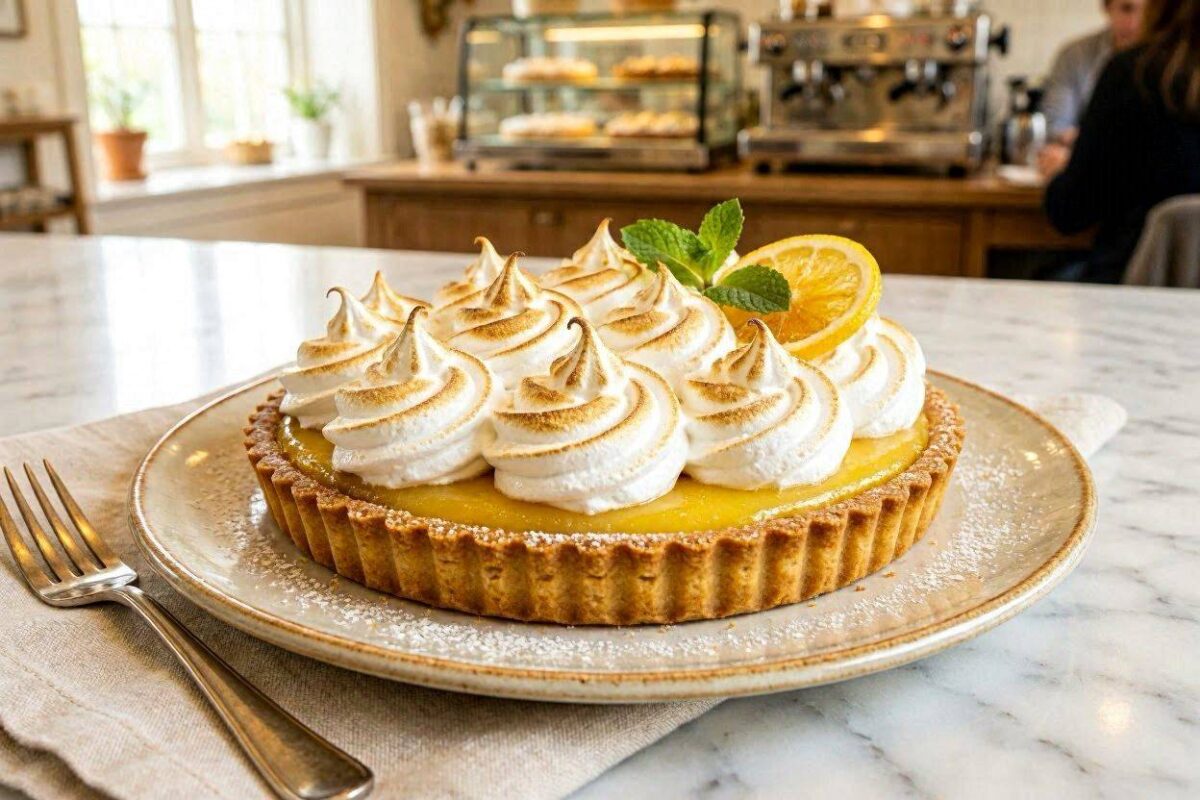
Last updated: July 24, 2026 · By Sarah, home cook and recipe developer
Few desserts manage to feel as refined and as genuinely refreshing at the same time as a proper French lemon tart. A crisp, buttery shell holds a silky, intensely tangy lemon curd, all finished with a cloud of glossy, lightly toasted Swiss meringue. It’s the kind of dessert that looks like it belongs in a Parisian patisserie window, yet every component is well within reach in a home kitchen once you understand the reasoning behind each step.
I came to this recipe after one too many disappointing lemon tarts — either too sweet, too runny, or with a meringue that wept sadly on the plate within an hour of assembly. What changed everything was learning to make the meringue the Swiss way, gently warming the egg whites and sugar together before whipping, rather than the more common French method. It’s a small extra step that solves nearly every stability problem I used to run into.
In this article, we’ll walk through the reasoning behind the tart shell, the lemon curd, and the Swiss meringue, common pitfalls at each stage, and a detailed, step-by-step method for pulling the whole dessert together with confidence.
Understanding the Three Components
This tart, like many classic French desserts, is really a combination of a few individually simple techniques, each of which benefits from understanding why it works the way it does.
The Tart Shell
As with most French tarts, the shell here is a pâte sucrée — a sweet, buttery shortcrust that needs to stay crisp even once filled with the moist lemon curd. Cold butter and minimal handling of the dough are what keep the gluten from developing too much, which is what would otherwise lead to a tough, chewy crust rather than a short, sandy one.
The Lemon Curd
Lemon curd gets its silky, spreadable texture from a careful balance of egg yolks, sugar, butter, and lemon juice, cooked gently until the eggs thicken the mixture without scrambling. The acidity of the lemon juice is what gives the curd its bright, tangy character, while the egg yolks and butter provide richness and a smooth, custard-like body.
The Swiss Meringue
Unlike French meringue, which involves whipping raw egg whites directly with sugar, Swiss meringue is made by gently warming the egg whites and sugar together over a double boiler until the sugar fully dissolves, before whipping. This extra step dissolves the sugar more completely and slightly cooks the egg whites, resulting in a meringue that’s noticeably more stable, glossy, and less prone to weeping or deflating compared to French meringue.
Why the Method Matters More Than Fancy Equipment
None of the three components in this tart require specialized equipment beyond a good saucepan, a mixing bowl, and a hand or stand mixer. What makes the difference between a home version and a professional-looking result is almost entirely in the technique — tempering the eggs slowly for the curd, warming the meringue properly before whipping, and giving each component enough time to cool and set before moving to the next step.
Ingredients (Serves 8)
For the tart shell:
- 1 1/4 cups all-purpose flour
- 1/4 cup powdered sugar
- Pinch of salt
- 1/2 cup cold unsalted butter, cubed
- 1 egg yolk
- 2–3 tablespoons ice water
For the lemon curd:
- 4 large eggs
- 1 cup granulated sugar
- Zest of 2 lemons
- 3/4 cup fresh lemon juice (about 4–5 lemons)
- 1/2 cup unsalted butter, cubed, at room temperature
For the Swiss meringue:
- 4 large egg whites
- 1 cup granulated sugar
- Pinch of salt
- 1/2 teaspoon vanilla extract
Step-by-Step Preparation
Step 1: Make the Tart Shell
In a food processor, pulse the flour, powdered sugar, and salt together briefly to combine. Add the cold cubed butter and pulse until the mixture resembles coarse crumbs. Add the egg yolk and one tablespoon of ice water, pulsing until the dough just barely comes together, adding more water a teaspoon at a time only if needed. Shape the dough into a disk, wrap it, and refrigerate for at least 30 minutes.
Step 2: Blind Bake the Crust
Preheat your oven to 375°F (190°C). Roll out the chilled dough and press it into a 9-inch tart pan with a removable bottom. Prick the bottom with a fork, line it with parchment paper, and fill with pie weights or dried beans. Bake for 15 minutes, then remove the weights and parchment and bake for another 8 to 10 minutes, until golden. Let it cool completely before filling.
Step 3: Make the Lemon Curd
In a heatproof bowl set over a pot of gently simmering water (not touching the water), whisk together the eggs, sugar, lemon zest, and lemon juice. Cook, whisking constantly, for about 8 to 10 minutes, until the mixture thickens enough to coat the back of a spoon.
A note from testing this recipe: The first time I made lemon curd, I had the water boiling too vigorously underneath, and the eggs scrambled slightly around the edges of the bowl before I noticed. Keeping the water at a bare, gentle simmer — barely bubbling — is the difference between silky curd and a slightly grainy one.
Step 4: Finish and Cool the Curd
Remove the bowl from the heat and whisk in the room-temperature butter a few cubes at a time, until fully incorporated and glossy. Strain the curd through a fine-mesh sieve to remove the zest and any bits of cooked egg, then pour it into the cooled tart shell. Refrigerate for at least 2 hours, or until fully set.
Step 5: Make the Swiss Meringue
In a heatproof bowl set over a pot of simmering water, whisk together the egg whites, sugar, and salt continuously until the sugar has fully dissolved and the mixture feels smooth (not gritty) when rubbed between your fingers, and reaches about 160°F (71°C). Remove from heat and whip with a mixer on high speed until it forms stiff, glossy peaks and has cooled to room temperature, about 8 to 10 minutes. Whisk in the vanilla extract at the end.
Step 6: Top and Toast the Tart
Once the lemon curd has fully set, pipe or spoon the Swiss meringue over the top in decorative peaks. Use a kitchen torch to lightly toast the meringue until golden in spots, or place it briefly under a broiler, watching closely to avoid burning.
Step 7: Serve
Slice with a sharp, clean knife, wiping the blade between cuts for neat slices through the set curd and meringue.
Tips for Success
Strain the curd. Passing the finished lemon curd through a fine sieve removes the zest and any small bits of cooked egg, resulting in a noticeably silkier texture.
Keep the water at a gentle simmer. For both the curd and the meringue, water that’s boiling too aggressively underneath can cause the eggs to cook unevenly or scramble.
Cool the meringue fully before serving. Whipping the Swiss meringue until it returns to room temperature, not just until stiff peaks form, helps it hold its shape better once piped onto the tart.
Torch the meringue just before serving. Toasting the meringue too far in advance can cause it to weep slightly over time, so it’s best done shortly before the tart is served.
Make components ahead separately. The tart shell and lemon curd can both be made a day in advance and stored separately, with the meringue made fresh on the day of serving for the best texture.
Serving Suggestions
This rich and vibrant tart is delicious on its own. It makes an elegant finale at dinner parties, especially when paired with a cup of espresso or tea to balance its sweetness. It’s best enjoyed within a day of making the meringue, as the topping has its best texture immediately after toasting.
Frequently Asked Questions
Can I use a regular meringue instead of Swiss meringue? You can, though Swiss meringue tends to hold up noticeably better over time and is less likely to weep or deflate, making it a better choice if the tart won’t be served immediately.
Why did my lemon curd turn out grainy or lumpy? This is usually a sign the eggs cooked too quickly, often because the water underneath was simmering too vigorously. Straining the finished curd through a fine sieve can help fix minor graininess after the fact.
Can I make the tart shell and curd ahead of time? Yes, both can be made up to a day in advance and stored separately in the refrigerator. Add the meringue on the day you plan to serve the tart for the best appearance and texture.
Do I need a kitchen torch to toast the meringue? A torch gives the most control, but a broiler works as an alternative — just watch it very closely, since meringue can go from lightly toasted to burnt within seconds under a broiler’s high heat.
About the author: Sarah is a home cook who develops and tests recipes focused on simple, wholesome ingredients. [You can expand this with relevant background — e.g., years of baking experience, pastry training, or a link to your recipe archive — to strengthen trust signals for readers and search engines.]
Final Thoughts
Luxury French lemon tart with Swiss meringue is proof that classic French pastry, while precise, doesn’t need to be intimidating once you understand the reasoning behind each technique. With a crisp shell, a bright, silky curd, and a stable, glossy meringue, this tart delivers a genuinely elegant dessert that’s well worth the slightly longer preparation time for the occasions that call for it.