
Luxury French Lemon Tart with Swiss Meringue: A Complete Guide to a Bright, Elegant Classic
July 20, 2026
Layered Chocolate and Whipped Cream Trifle with Black Cherries: A Complete Guide to an Effortless, Impressive Dessert
July 21, 2026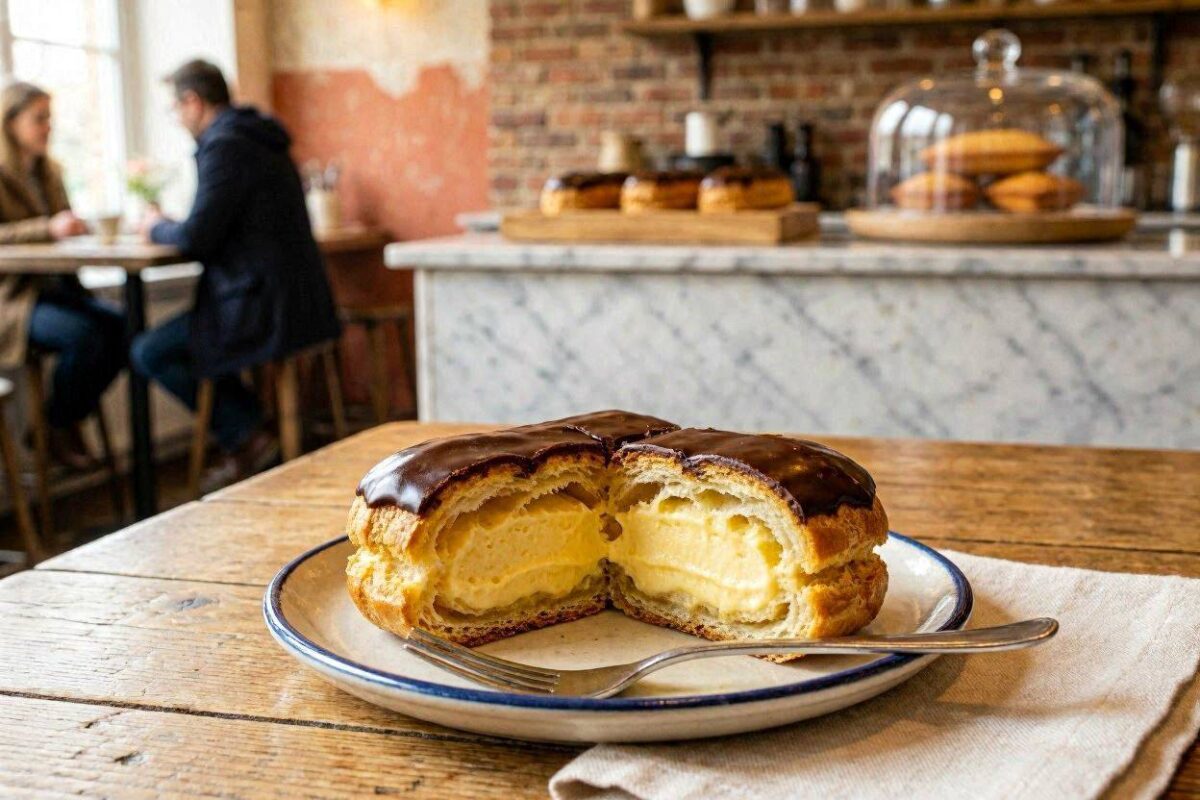
Last updated: July 20, 2026 · By Sarah, home cook and recipe developer
Few pastries carry the same instant recognition as a proper French eclair — a crisp, hollow shell of choux pastry, filled with silky vanilla pastry cream, and finished with a glossy layer of chocolate glaze. It’s a dessert that looks deceptively difficult, when in reality it comes down to just a handful of well-understood techniques, each of which is entirely manageable in a home kitchen.
I avoided making eclairs for a long time, mostly out of intimidation from watching one too many baking shows treat choux pastry like some unteachable art. What finally got me over that hurdle was realizing choux dough gives you very clear visual and textural cues at every stage — it’s much more forgiving than it looks once you know what you’re watching for. The version below reflects a fair number of batches where I learned exactly what those cues are.
In this article, we’ll look at the reasoning behind choux pastry, pastry cream, and chocolate glaze, common pitfalls at each stage, and a detailed, step-by-step method for pulling together eclairs with real bakery-quality results.
Understanding the Three Components
An eclair is really three separate techniques brought together, each of which benefits from understanding the reasoning behind it rather than just following steps blindly.
Choux Pastry
Choux pastry (pâte à choux) is unusual among pastry doughs because it’s cooked twice — once on the stovetop to form a thick paste, and again in the oven, where trapped steam causes it to puff up dramatically, creating a hollow interior perfect for filling. Getting the right consistency of the dough before piping, and not opening the oven door too early, are the two most critical factors in achieving a properly puffed, hollow shell.
Pastry Cream
Pastry cream (crème pâtissière) is a rich custard thickened with both egg yolks and a starch, usually cornstarch, which allows it to be cooked to a full boil without curdling — something a standard custard made with eggs alone couldn’t withstand. This starch stabilization is what gives pastry cream its thick, pipeable texture that holds its shape inside the eclair rather than running out.
Chocolate Glaze
A simple chocolate glaze, made from melted chocolate, cream, and a touch of corn syrup or glucose, provides a glossy, slightly firm finish that contrasts nicely with the light, airy shell and cream underneath. The corn syrup or glucose helps prevent the glaze from crystallizing and keeps it glossy rather than dull once set.
Why Timing and Visual Cues Matter More Than Precision Measuring
Unlike some baking recipes where exact measurements are non-negotiable, choux pastry actually relies more on visual and textural cues — how the dough looks when it pulls away from the pan, how it falls off a spoon, how the shells sound when tapped after baking — than on rigid measurements alone. Learning to read these cues is what separates a home baker who’s made choux pastry once from one who can make it reliably every time.
Ingredients (Makes about 12 eclairs)
For the choux pastry:
- 1/2 cup water
- 1/2 cup whole milk
- 1/2 cup unsalted butter, cubed
- 1 teaspoon sugar
- 1/4 teaspoon salt
- 1 cup all-purpose flour
- 4 large eggs, at room temperature
For the vanilla pastry cream:
- 2 cups whole milk
- 1 vanilla bean, split and scraped (or 2 teaspoons vanilla extract)
- 4 egg yolks
- 1/2 cup granulated sugar
- 3 tablespoons cornstarch
- 2 tablespoons unsalted butter
For the chocolate glaze:
- 6 oz dark chocolate, finely chopped
- 1/2 cup heavy cream
- 1 tablespoon corn syrup or light glucose syrup
Step-by-Step Preparation
Step 1: Make the Choux Pastry
Preheat your oven to 425°F (220°C) and line a baking sheet with parchment paper. In a saucepan, combine the water, milk, butter, sugar, and salt, and bring to a boil over medium heat. Once boiling and the butter has fully melted, remove from heat and add the flour all at once, stirring vigorously with a wooden spoon until the mixture forms a smooth ball and pulls away cleanly from the sides of the pan.
Step 2: Cook the Dough Briefly
Return the pan to low heat and cook the dough for about 1 to 2 minutes, stirring constantly, to cook off some of the excess moisture — you’ll notice a thin film forming on the bottom of the pan. This step helps the dough absorb the eggs more effectively in the next stage.
Step 3: Add the Eggs
Transfer the dough to a mixing bowl and let it cool for a few minutes. Add the eggs one at a time, beating well after each addition until fully incorporated before adding the next. The finished dough should be smooth, glossy, and fall off a spatula in a thick ribbon.
A note from testing this recipe: The first time I made choux, I added all the eggs at once out of impatience, and the dough turned soupy and never came back together properly. Adding them one at a time, and making sure each is fully absorbed before the next, is the step that makes the biggest difference in getting the right consistency.
Step 4: Pipe and Bake the Shells
Transfer the dough to a piping bag fitted with a large round tip and pipe 4 to 5-inch logs onto the prepared baking sheet, spaced well apart. Bake at 425°F (220°C) for 10 minutes, then reduce the oven temperature to 350°F (175°C) and continue baking for another 20 to 25 minutes, until the shells are deeply golden and sound hollow when tapped. Do not open the oven door during baking, as the sudden temperature drop can cause the shells to collapse.
Step 5: Cool the Shells
Turn off the oven and let the shells sit inside with the door slightly ajar for about 10 minutes to help them dry out and stay crisp. Then transfer them to a wire rack to cool completely.
Step 6: Make the Pastry Cream
In a saucepan, heat the milk with the scraped vanilla bean (or vanilla extract) until it just begins to simmer. In a separate bowl, whisk together the egg yolks, sugar, and cornstarch until pale and smooth. Slowly pour about a third of the hot milk into the egg mixture while whisking constantly, to temper the eggs, then pour everything back into the saucepan. Cook over medium heat, whisking constantly, until the mixture thickens significantly and comes to a full boil for about 1 minute. Remove from heat and stir in the butter until fully melted. Strain if needed, then press plastic wrap directly onto the surface and refrigerate until fully chilled.
Step 7: Make the Chocolate Glaze
Place the chopped chocolate in a heatproof bowl. Heat the cream and corn syrup together in a small saucepan just until it begins to simmer, then pour over the chocolate. Let sit for a minute, then stir until smooth and glossy.
Step 8: Fill and Glaze the Eclairs
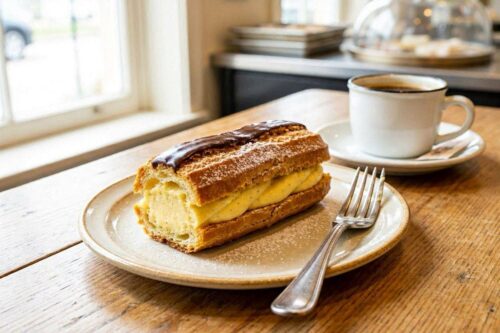
Once the shells are completely cool, use a piping bag fitted with a small round tip to poke a hole in each end of the shells and pipe the chilled pastry cream inside until each eclair feels noticeably heavier. Dip the top of each filled eclair into the chocolate glaze, letting any excess drip off before setting them glaze-side up to set.
Tips for Success
Don’t skip cooking the dough briefly before adding eggs. This step evaporates excess moisture and helps the dough absorb the eggs properly rather than becoming greasy or soupy.
Add the eggs gradually. Adding them all at once is one of the most common reasons choux dough fails to come together with the right consistency.
Resist opening the oven door. A sudden temperature drop while the shells are still puffing can cause them to deflate, so patience here is essential.
Chill the pastry cream fully before filling. Warm pastry cream is much harder to pipe cleanly and can make the shells soggy more quickly.
Fill the eclairs close to serving time. Choux shells are at their crispest within a few hours of filling, so if possible, fill them the same day you plan to serve them.
Serving Suggestions
Eclairs are best enjoyed within a few hours of being filled, while the crust is still slightly crisp and the filling is cool and creamy. They make an elegant addition to an afternoon tea table or dinner dessert table, and pair particularly well with a strong cup of coffee to balance their sweetness.
Frequently Asked Questions
Why did my choux pastry shells collapse after baking? This is usually caused by opening the oven door too early, underbaking the shells so they haven’t fully dried out inside, or not cooking the dough on the stovetop long enough before adding the eggs.
Can I make the components ahead of time? Yes — the pastry cream can be made up to two days in advance and stored in the refrigerator, and the baked (unfilled) shells can be stored in an airtight container for a day or two, though they’re best filled shortly before serving for maximum crispness.
Can I freeze unfilled eclair shells? Yes, baked and cooled shells freeze well for up to a month. Thaw them at room temperature and, if needed, crisp them briefly in a low oven before filling.
What if my pastry cream turns out lumpy? This usually happens if the milk was added too quickly to the eggs without proper tempering, or if the mixture wasn’t whisked constantly while thickening. Straining the finished cream through a fine sieve can smooth out minor lumps.
About the author: Sarah is a home cook who develops and tests recipes focused on simple, wholesome ingredients. [You can expand this with relevant background — e.g., years of baking experience, pastry training, or a link to your recipe archive — to strengthen trust signals for readers and search engines.]
Final Thoughts
Traditional French eclairs with rich vanilla cream filling show that even the most iconic pâtisserie desserts come down to a series of learnable, repeatable techniques rather than unattainable skill. With a properly puffed choux shell, a silky pastry cream, and a glossy chocolate glaze, this recipe delivers genuinely bakery-quality results, and the confidence gained from mastering choux pastry opens the door to countless other classic desserts built on the same base.