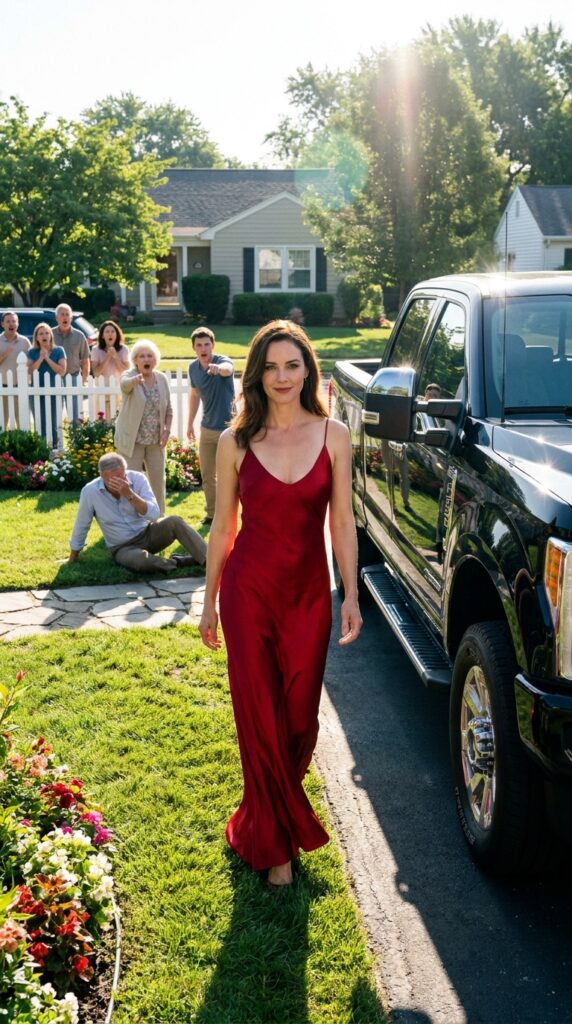

After years of being called the family’s babysitter, my mom finally said: “If you want to live here, you’ll have to start paying rent.” I smiled, grabbed my bags, and drove off. A week later, my sister texted… then she called me screaming
- Stories
Cuisine And Stories
- 0
- 7 minutes read

Chapter 5: The Price of Belonging
I didn’t invite her to my apartment. We stood in the hospital parking lot, the humid South Carolina air thick between us.
“I really thought you’d come back the same day,” she admitted, her voice smaller than I had ever heard it. “You always do. You always adjust.”
“That’s the problem, Mom,” I said. “You counted on my pattern more than you valued my pain. You built your comfort on my erasure.”
“We’re family!” she cried, the old battle cry of the entitled. “Family carries each other!”
“No,” I corrected her. “You and Brielle were being carried. I was the one doing the carrying. There’s a difference.”
She told me that Brielle was “drowning.” That her real estate career was suffering because she couldn’t find child care she could afford. That the twins were acting out because their world was chaotic. She asked if I could just “help out on weekends” to bridge the gap.
Even now, after I had left, they were still trying to negotiate access to my labor.
“No,” I said. “If Brielle needs a sitter, she can hire one. If she can’t afford one, she needs to change her lifestyle. My life is no longer a subsidy for hers.”
She looked at me like I was a stranger. And in a way, I was. I was a woman who had finally learned the word No.
A week later, Brielle reached out. She didn’t send a text war. She asked to meet at a coffee shop.
When I walked in, she looked exhausted. Her hair was in a messy knot, and there were dark circles under her eyes. She looked like someone who had been forced to meet herself and didn’t like the introduction.
“I hate that you were right,” she said, staring into her coffee.
She told me she had lost two clients in ten days because her schedule was a mess. She admitted that she and Mom had fought so loudly the twins had started crying. She confessed that she had never bothered to learn what child care actually cost because she had always had me.
“I didn’t realize Mom treated you like that because I was the one benefiting from it,” she said. It was the closest thing to accountability I had ever heard from her.
Then, she slid a check across the table. It wasn’t a huge amount, but it was real.
“For the groceries and the school fees you covered last year,” she said. “I found the receipts in the kitchen drawer.”
I looked at the check. I didn’t need the money, but I took it. Refusing it would have been the old me—the one who swallowed loss to prove love. Taking it was an acknowledgment that my time and my labor had value.
“I’m not coming back, Brielle,” I said.
“I know,” she replied. “Mom calls you ‘the reliable one’ like it’s praise. I realize now it was just code for ‘easiest to use.’”
Chapter 6: The Ghost Returns for Dinner
Three weeks later, I agreed to stop by the house for thirty minutes. Not to babysit. Not to clean. Just to see my brothers.
When I pulled into the driveway, the change was visceral. The yard was overgrown. There were toys scattered on the porch. Through the window, I could see dishes in the sink. It wasn’t a disaster, but it was the ordinary, grinding mess of a family that was finally learning how to function on its own.
My mother opened the door and burst into tears the moment she saw me. She tried to hug me, and for the first time, I didn’t stiffen. I leaned into it, but I didn’t disappear.
Inside, Cole was making boxed mac and cheese while Jace hunted for a permission slip. One twin was coloring on the floor. It was loud and imperfect, but it was honest. No one was pretending that the house ran itself anymore.
My mother pulled me into the kitchen. “I was wrong,” she said, her voice trembling. “I was wrong to make your usefulness your only place in this family. I was ashamed of how much I leaned on you, so I called it ‘duty’ to make myself feel better.”
I looked around the kitchen where I had once packed lunches while half-asleep. I felt a profound sense of calm.
“You taught me something important, Mom,” I said. “Never let people confuse access with love. And never keep proving your value to people who only notice it when you’re gone.”
I stayed for exactly twenty-eight minutes. I kissed the twins on their heads—none of this had ever been their fault—and I walked back out to my car.
As I drove back to my tiny apartment above the flowers, I realized that walking away hadn’t destroyed my family. It had forced them to see themselves. And more importantly, it had saved me.
Sometimes, the most “adult” contribution you can make is to stop over-functioning for people who are perfectly capable of saving themselves.
I sat on my balcony that night, watching the moon rise over West Ashley. I thought about the woman I used to be—the one who thought her only worth was her work. She was gone. In her place was someone who knew that love without respect is just obligation wearing a mask.
So let me ask you: if your family only noticed your value after you were gone, would you go back to the way things were? Or would you finally choose the version of yourself that no longer needs to earn a seat at the table?
Like and share this post if you find it interesting. Sometimes the loudest thing you can say is nothing at all.