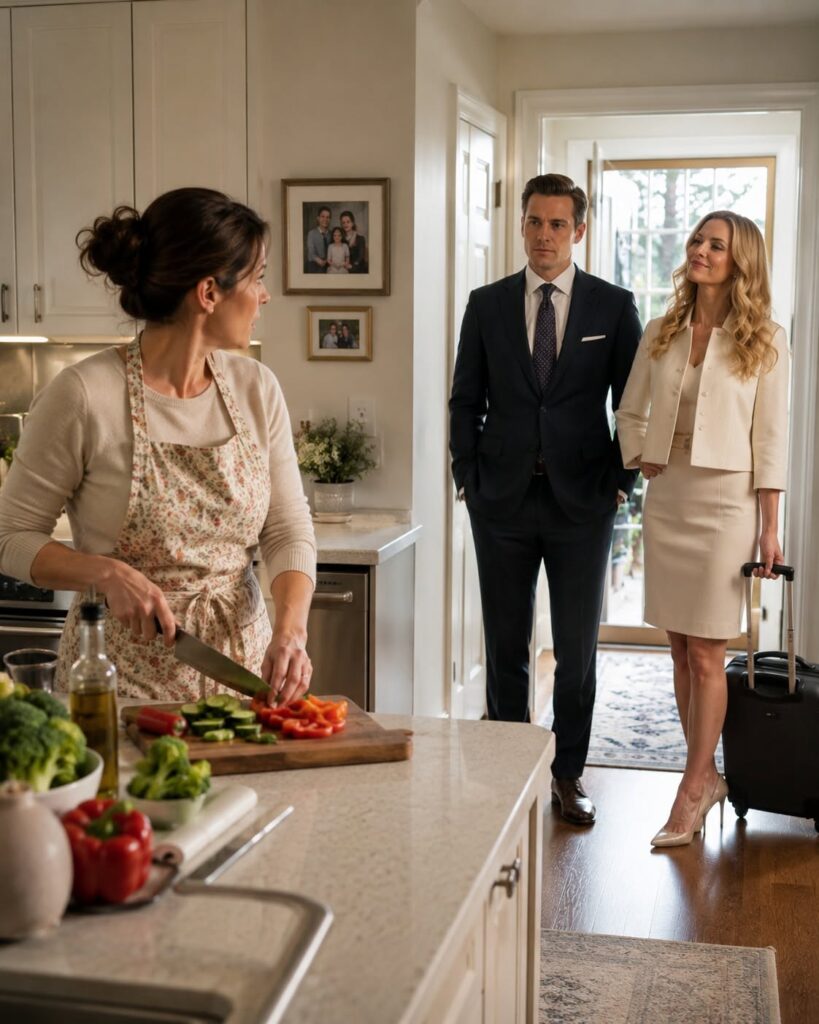

I was giving my daughter a bath when my sister called. “I’m sorry… I had to do what’s best for the kids. CPS will be there in the morning.” Then she hung up. I just stood there, realizing what this meant.
- Stories
Cuisine And Stories
- 0
- 13 minutes read
I was kneeling on the bathroom floor, the humidity thick with the scent of strawberry bubblegum shampoo, rinsing suds from my six-year-old daughter’s hair. Maya was laughing, trying to shape the foam into a crown, when my phone buzzed on the counter. It was my sister, Clare.
I wiped my wet hands on a towel and answered, expecting a casual check-in.
“I’m so sorry,” she whispered. Her voice was trembling, brittle. “I had to do what’s right for the kids. CPS will be there tomorrow morning.”
“Clare? What are you talking about?”
“I couldn’t watch it anymore,” she said, and then the line went dead.
I stared at the phone, water dripping from my elbow onto the bathmat. A cold knot of dread tightened in my stomach, utterly at odds with the warm, steamy bathroom. I tried to call back. Straight to voicemail. I told myself she was having a breakdown, maybe an argument with her husband. I finished bathing Maya, tucked her and my nine-year-old son, Devon, into bed, and paced the living room until sunrise.
At 7:00 A.M., the knock came. It wasn’t a polite tap; it was the heavy, authoritative pounding of law enforcement.
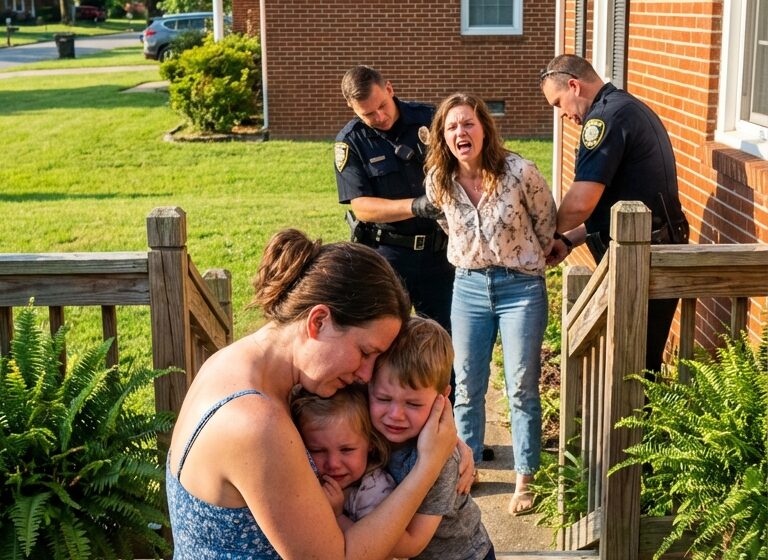
When I opened the door, my reality fractured. A CPS investigator stood there, flanked by two uniformed police officers holding a court order.
“We received a credible report of physical and emotional abuse,” the investigator stated, his voice devoid of any warmth. “We need to examine your children and your home immediately.”
“This is a mistake,” I stammered, blocking the doorway instinctively. “My sister called, she’s confused, she—”
“Step aside, ma’am,” one of the officers said, his hand resting near his belt.
They swarmed my sanctuary. They opened drawers, photographed the refrigerator, and checked the temperature of the water. Then, they separated us. They took Maya into her bedroom and Devon into the kitchen. I stood in the hallway, straining to hear, my heart hammering against my ribs like a trapped bird.
Ten minutes later, Maya came out sobbing, clutching her favorite stuffed rabbit. Devon followed, looking pale and terrified, his eyes darting between me and the officers.
“We found a bruise on Devon’s upper arm,” the investigator announced, closing his notebook. “And Maya exhibits clear signs of anxiety in your presence.”
“Devon plays competitive soccer!” I shouted, panic rising in my throat. “He’s a midfielder. He gets bruised every week fighting for the ball. Ask his coach! And Maya is crying because strangers are interrogating her!”
They didn’t care about explanations. “We are removing the children immediately for their safety. They will be placed in emergency foster care pending the hearing.”
“No!” I lunged forward to grab Maya’s hand.
“Ma’am! Step back or you will be restrained!” The officer stepped between us, his chest bumping mine.
I froze. If I fought, I would go to jail, and they would be truly alone. I watched, paralyzed by a nightmare, as they ushered my children out the door. Maya was screaming, “Mommy! Mommy, no!” Devon wasn’t making a sound, but tears were streaming down his face, silent and devastating.
They put them in a white van. The investigator shoved a stack of paperwork into my shaking hands.
“Do not contact your children. We will investigate. If the allegations are substantiated, you could face twenty years in prison. Your hearing is in five days.”
The van drove away, taking my life with it. I stood on the sidewalk, the morning sun feeling cold on my skin, watching them disappear around the corner.
The silence of the house was louder than the screaming had been.
The first thing I did was call the number on the paperwork for their emergency placement. I begged the woman who answered. “Please. I just want to hear their voices. Just for one minute. Tell them I love them.”
“No contact means no contact, ma’am,” she said sharply. “Any violation could result in criminal charges and hurt your case.” Click.
I drove to Maya’s daycare, desperate for attendance records, proof of her happiness, proof that she was a thriving, loved child. The director met me at the door, her arms crossed.
“CPS instructed us not to speak with you,” she said, not meeting my eyes. “Your sister already came by to collect Maya’s belongings. She’s been granted temporary guardianship.”
My knees almost gave out. “Temporary what? The hearing isn’t for five days.”
“Emergency placement with family,” she said. “It’s standard protocol when a relative steps forward. I’m sorry, but you need to leave.”
Clare. She had them.
I raced home, my mind racing. I needed proof. I went to my home office to check my security camera system. I had six months of footage—family dinners, homework sessions, bedtime stories, tickle fights. Irrefutable proof of a loving home.
I reached for the external hard drive. It was gone.
I looked behind the desk. The cables had been cut cleanly.
Clare had a key. She had watered my plants last week while I was at a conference. She had been here. She had stolen the only thing that could save me.
I called the police. “My sister broke in,” I yelled into the receiver. “She stole evidence. She framed me!”
The officer who arrived an hour later looked bored. He scribbled on a notepad without looking up. “Ma’am, your sister has temporary custody. She is legally allowed to collect the children’s belongings from their primary residence. If you believe an item was stolen, you can file a report, but theft investigations take weeks.”
“I don’t have weeks! My hearing is in five days!”
“Then I suggest you speak with your lawyer.”
I was assigned a public defender. When I finally got him on the phone and explained the deleted footage, Clare’s lies, and her obsession with my children, he sighed. A tired, heavy sound.
“Listen,” he said. “I have sixty-three active cases. CPS found bruises. Multiple witnesses—neighbors your sister spoke to—support the abuse claims. Your sister has a spotless record, a stable marriage, and passed an emergency home study in forty-eight hours. That doesn’t happen unless she started the process months ago.”
“Exactly!” I said. “She planned this!”
“Do you have proof?”
“No.”
“I’ll do my best,” he said, his voice flat. “But the evidence is overwhelming. You need to prepare yourself for losing custody.”
For the next four days, I lived in hell. I called everyone. Maya’s pediatrician, Devon’s coach, my late husband’s family. They were sympathetic but distant. The accusation of abuse is a stain that doesn’t wash off easily. Even those who knew me hesitated.
I spent my savings hiring a private investigator on day four. “Find proof,” I told him. “Search histories, texts, anything.”
He called me back three hours later. “I can’t take your case. Your sister’s lawyer contacted me. He said if I interfere with an active CPS investigation involving a minor, I could lose my license. I’m sorry.”
The night before the hearing, I sat on the floor of Devon’s empty room, holding one of his soccer cleats. I had tried everything. And I had failed. Clare had checkmated me before I even knew we were playing a game.
The courtroom smelled of floor wax and stale coffee. I sat at the defendant’s table with my public defender, who was flipping through a file he barely knew. Across the aisle, Clare sat with her husband. She looked devastatingly sad, dabbing her eyes with a tissue, playing the role of the heartbroken aunt perfectly.
Judge Kramer called the hearing to order at 10:00 A.M.
The caseworker presented the file. It was a masterpiece of fiction. Photos of Devon’s soccer bruises presented as defensive wounds. A report from a guidance counselor Clare had called. Witness statements from neighbors saying they heard shouting—which was likely us cheering at football games on TV.
Then, Clare testified.
She wept softly. “I love those children like they are my own,” she said, her voice shaking. “I tried to help her. I tried to step in. But I can’t watch them suffer anymore. My husband and I have a room ready. A stable home. Two parents. They deserve to be safe.”
The judge looked at me, his expression stern. “Does the defense have evidence contradicting these allegations?”
My lawyer stood up, buttoning his ill-fitting suit jacket. “Your Honor, we can explain the bruises. The boy plays competitive soccer…”
“Do you have evidence?” the judge repeated, cutting him off.
The silence that followed was the sound of my life ending.
Suddenly, the courtroom doors banged open.
My late husband’s best friend, Elena, rushed in, her hair wild, clutching a silver laptop to her chest.
“Your Honor!” she gasped, breathless. “I have proof! She didn’t do this!”
Judge Kramer frowned, banging his gavel. “Ma’am, you cannot just barge in here—”
“I found Clare’s laptop,” Elena shouted, ignoring the bailiff moving toward her. “I have her search history. I have everything!”
The judge paused. He looked at Clare, whose face had drained of all color. He waved Elena forward. “Approach the bench.”
Elena opened the laptop and plugged it into the presentation cable. The large screen on the wall flickered to life.
“Look at the dates,” Elena said, her voice ringing clear.
There it was. Four months ago.
Google Search: “How to win a CPS case against a sibling.” Google Search: “How to stage child abuse photos.” Google Search: “Getting custody of niece and nephew if mother is unfit.”
Elena clicked a folder labeled “The Plan.”