Baked Sweet Potato Stuffed with Black Beans – Sarah’s Wholesome, Hearty, Flavorful Plant-Based Bowl
July 25, 2026
Classic Baked Macaroni and Cheese – Sarah’s Creamy, Golden, Soul-Warming Classic
July 25, 2026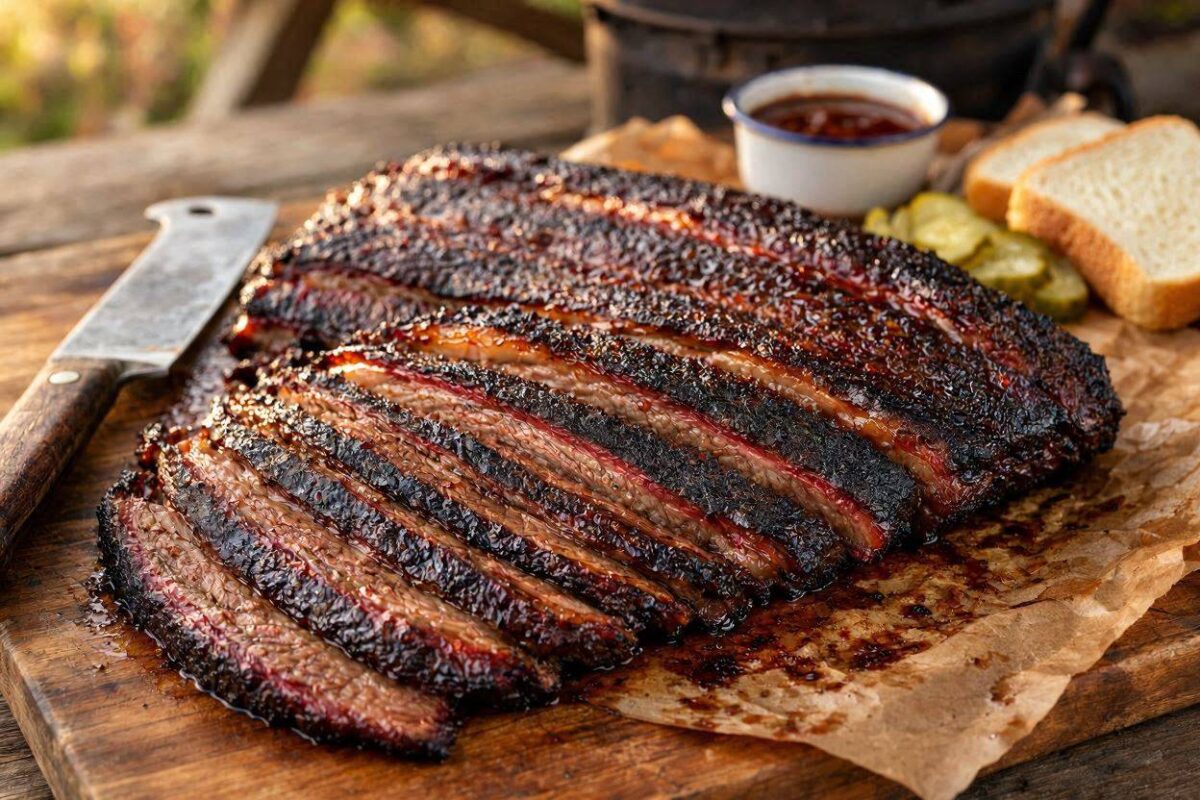
Introduction – A Word from Sarah
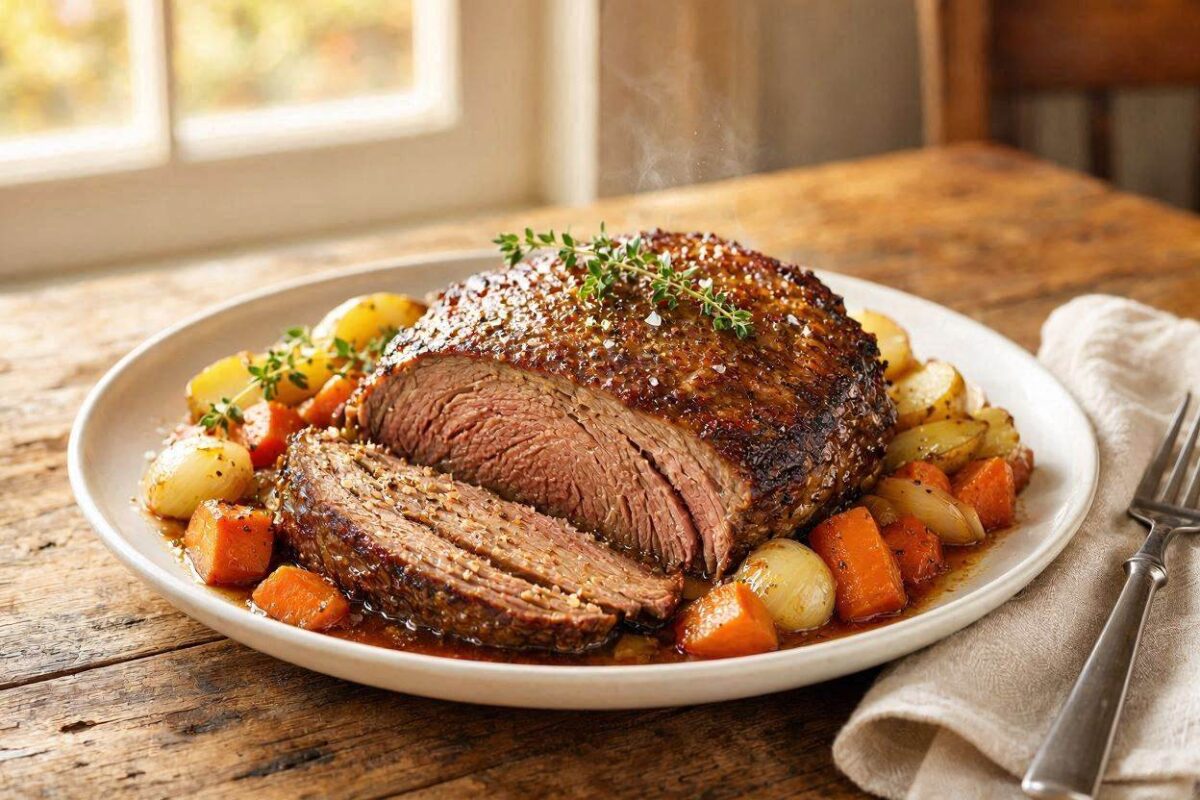
I’m Sarah, and if there’s one dish that makes me feel like I’m at a legendary Texas barbecue joint, it’s this Texas-Style BBQ Beef Brisket.
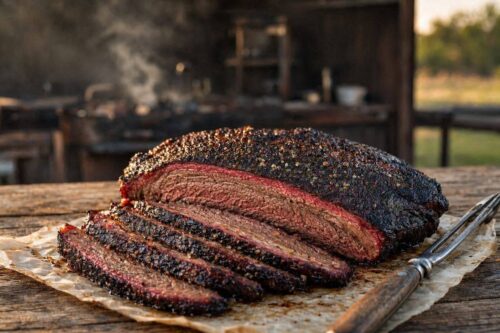
I still remember the first time I tasted it. It was at a small, unassuming pit stop in the Texas Hill Country, where the smoke curled up from an old-school offset smoker. The brisket was sliced thick, with a jet-black, peppery bark and a pink smoke ring that ran all the way through. One bite, and I understood why Texans treat brisket like a religion.
Today, I’m sharing with you Sarah’s Texas-Style BBQ Beef Brisket — the dish that brings the taste of the Lone Star State to your backyard.
Why This Brisket Is Special in Sarah’s Kitchen
Texas-style brisket isn’t just barbecue — it’s a smoky, tender, legendary tradition. It’s the dish I turn to when I want to feed a crowd, impress with pitmaster skills, and create something truly memorable.
What makes it unique in my kitchen:
-
The simplicity: Just salt, pepper, smoke, and time — no fancy sauces needed.
-
The smoke ring: That beautiful pink line that develops when you smoke it low and slow.
-
The bark: A dark, peppery crust that locks in all the juices.
-
The tenderness: Slow-smoked until it’s probe-tender and melts in your mouth.
-
The tradition: A beloved Texas classic served with pickles, onions, and white bread.
A Brief History – Why Brisket Is King in Texas
I’m Sarah, and I love sharing the story behind this iconic dish.
In Texas, barbecue means beef, and brisket is king. The Central Texas style is known for its minimalist approach — just salt, pepper, and slow smoking over post oak wood. This is the tradition made famous by legendary joints like Franklin Barbecue in Austin.
The magic is letting the premium beef and smoke do the talking. No sugar rubs, no heavy sauces — just pure, smoky, beefy perfection.
Ingredients – From Sarah’s Kitchen
For the Brisket:
-
1 whole packer brisket (10-12 lbs / 4.5-5.4 kg) — this includes both the flat and the point.
-
⅓ cup coarse kosher salt (Diamond Crystal or similar).
-
3 tablespoons freshly ground black pepper (coarse, not fine).
For the Smoker Setup:
-
Wood chunks (post oak is classic; hickory or pecan work too).
-
Water pan (to stabilize temperature and catch drips).
For the Texas Crutch (Optional but Recommended):
-
Butcher paper or heavy-duty aluminum foil.
-
½ cup beef broth (for moisture, if wrapping).
For Serving:
-
Pickles and sliced onions.
-
White bread (the classic Texas accompaniment).
-
Texas-style barbecue sauce (optional — but traditionalists skip it).
Step-by-Step Method – Sarah’s Golden Steps
Step 1: Trim the Brisket
I’m Sarah, and I’ve learned that proper trimming is the key to a perfectly cooked brisket.
Start with a chilled brisket — it’s easier to trim when it’s cold. Trim the fat cap to about ¼ inch thick. Remove any hard, waxy fat that won’t render during cooking. On the meat side, remove the silver skin so the rub can stick and the smoke can penetrate.
Trim any ragged edges that might burn, and make sure the brisket is aerodynamic — no peaks or valleys.
Sarah’s Tip: “Fat is flavor, but too much fat can block the smoke from reaching the meat,” says Head Pitmaster Shannon Snell. Leave enough to keep it moist, but not so much that it prevents a good bark.
Step 2: Season Simply and Generously
I’m Sarah, and this is where the Texas magic begins!
In a small bowl, mix together the coarse salt and freshly cracked black pepper.
Sarah’s Tip: Texas truth — simplicity lets the beef and smoke take center stage. No sugar, no garlic, no paprika needed.
Coat the entire brisket in the rub, pressing it firmly into the meat. Don’t rub it in — just pat it down so it sticks evenly. You want a generous, even coating that will form that beautiful dark bark.
If you have time, let the seasoned brisket sit in the fridge overnight to allow the rub to penetrate and the surface to dry slightly.
Step 3: Fire Up the Smoker
I’m Sarah, and this is where patience becomes the secret ingredient!
Preheat your smoker, grill, or Big Green Egg to 250°F (121°C) and set it up for indirect cooking.
If you’re using a charcoal grill, set up a “charcoal snake” — two rows of briquettes in a semicircle with wood chunks spaced along it. Light one end, and it will slowly burn for 6 hours or more.
Sarah’s Tip: For purists, post oak is the classic wood. But hickory, pecan, or fruit woods will still produce stellar results. Avoid resinous woods like pine or fir, which burn dirty and taste harsh.
Place a disposable aluminum pan filled with water in the center of the grill beneath the brisket. This stabilizes the temperature and catches rendered fat.
Step 4: Smoke Low and Slow
I’m Sarah, and this is where the magic happens!
Place the brisket on the smoker, fat side down to shield the flat from radiant heat. Close the lid and let it smoke for 6-8 hours, until the internal temperature reaches 160-170°F.
Sarah’s Tip: Resist the temptation to open the lid — every peek releases heat and smoke. Let the brisket build that beautiful bark.
Around 150-170°F, you’ll hit “the stall,” where the temperature plateaus due to evaporative cooling. This is normal — it’s just moisture evaporating from the surface. Don’t fight it; let the stall build bark.
Step 5: Wrap (The Texas Crutch)
I’m Sarah, and this is where you power through the stall!
Once the bark is set and the internal temperature hits 165-170°F, it’s time to wrap.
Lay out a large sheet of butcher paper or heavy-duty aluminum foil. Place the brisket in the center, fat side up. Pour a little beef broth over it for extra moisture. Wrap it tightly and return it to the smoker.
Sarah’s Tip: Butcher paper is the preferred choice in Texas because it breathes, preserving the bark. Foil works well too, but the bark may soften.
Continue cooking until the brisket reaches 200-205°F and is probe-tender — a thermometer or skewer should slide through the thickest part of the flat with little resistance.
Sarah’s Tip: Don’t cook to temperature alone; cook to feel. Some briskets finish at 200°F, others at 208°F. The probe should feel like it’s going into warm butter.
Step 6: Rest Like a Pitmaster
I’m Sarah, and this is the most important step!
Remove the wrapped brisket from the smoker and let it vent steam for 2-3 minutes. Rewrap it tightly, swaddle it in towels, and place it in a cooler (faux cambro) for 2-4 hours.
Sarah’s Tip: Don’t skip this step! Resting allows the juices to redistribute throughout the meat and the collagen to finish breaking down. This is what makes brisket tender and juicy instead of dry and crumbly.
Step 7: Slice and Serve
I’m Sarah, and this is the moment everyone has been waiting for!
Unwrap the brisket and reserve any juices. Place it on a cutting board and identify the grain direction of the flat. Slice across the grain into pencil-thick slices.
Sarah’s Tip: The point muscle has a different grain direction, so you’ll need to rotate the brisket and slice across that as well.
Serve the slices with pickles, onions, white bread, and a drizzle of the reserved juices. And if your family reaches for the BBQ sauce, just smile and let them enjoy it — even if the traditionalists say you don’t need it.
How to Serve – Sarah’s Style
I’m Sarah, and I love serving this Texas-style brisket with:
-
Pickles, onions, and white bread: The classic Lone Star combo.
-
Texas-style barbecue sauce: Sharp, vinegar-based to cut through the richness.
-
Cole slaw or potato salad: The perfect sides.
-
Beans: Smoky, hearty, and a barbecue staple.
Secrets to Success – From Sarah’s Experience
| Question | Sarah’s Answer |
|---|---|
| Why is my brisket dry? | The flat was trimmed too lean, the temperature ran too hot, or it wasn’t rested long enough. Leave ¼ inch of fat and extend the rest time. |
| Why isn’t my bark forming? | You wrapped too early. Let the bark set before wrapping — it should be mahogany, dark, and tacky. |
| Why is my smoke bitter? | The fire was dirty — not enough airflow or wet wood. Use dry wood and open the vents. |
| Do I need a smoker? | No! A kettle grill with a charcoal snake setup works beautifully. |
| Can I finish it in the oven? | Yes — once it’s wrapped, you can move it to an oven set at 225-250°F. |
Sarah’s Brisket Temperature Guide
| Stage | Internal Temp | What’s Happening |
|---|---|---|
| Smoking begins | 40-120°F | Meat absorbs smoke |
| Bark forming | 120-150°F | Surface dries and darkens |
| The stall | 150-170°F | Evaporation slows cooking |
| Wrap | ~165°F | Speeds past the stall |
| Done | 200-205°F | Collagen fully rendered, probe-tender |
Conclusion – A Message from Sarah to You
I’m Sarah , and this Texas-Style BBQ Beef Brisket is the dish that taught me the beauty of patience and simplicity.
It reminds me that the best things in life take time — hours of smoke, a simple rub, and the patience to let the meat become its best self.
I hope you try this recipe and make it your own. I hope it becomes your go-to for summer cookouts, game days, and everything in between.
If you try it, please share your experience with me! Did the bark turn out perfectly? Did your family love it? I’d love to hear all about it.
With love, smoke, and a little bit of Texas magic, Sarah. 🤍🥩