
The Pilot Thought She Was Too Ordinary for the Private Jet—Until One Call Revealed She Owned the Sky
- Stories
Cuisine And Stories
- 0
- 7 minutes read
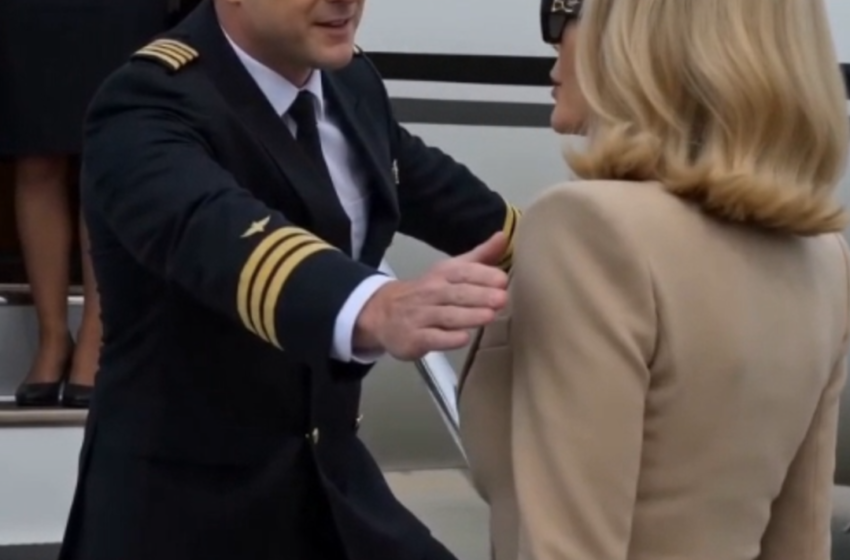
“Sophia,” he called. “There has clearly been a misunderstanding.”
Sophia stopped near the nose of the jet.
“Chairwoman Sterling,” she said.
Gordon’s smile froze.
“Of course. Chairwoman Sterling.”
Mark looked at Gordon with desperate relief.
“Sir, I didn’t know it was her.”
Sophia turned to him.
“You keep saying that like it helps.”
Mark’s mouth shut.
Gordon gave a controlled laugh. “Mark is one of our best pilots. He made a security judgment. We can review protocol, but termination seems premature.”
Sophia looked toward Ava.
Ava stood straighter.
Then Sophia turned back to Gordon.
“Did you receive complaints about Captain Dawson?”
Gordon’s expression remained calm.
“All complaints are reviewed through proper channels.”
“That wasn’t my question.”
His smile thinned.
“Yes. Some concerns were raised.”
“By Ava Brooks?”
Gordon glanced at Ava. “Among others.”
“And after she reported him, did her route schedule change?”
“Scheduling is complex.”
Sophia nodded.
“That means yes.”
Mark looked between them, suddenly understanding that this conversation was no longer about the tarmac.
Sophia opened her handbag and removed a thin folder.
Gordon’s eyes dropped to it.
His face changed.
Not much.
Enough.
Sophia noticed.
“This company was built by my father after he left the Air Force,” she said. “He used to say aviation only works when the lowest-ranking person in the room can stop the highest-ranking person from making a fatal mistake.”
Ava’s eyes flickered.
Sophia continued.
“Somewhere along the way, Sterling Aviation forgot that.”
Gordon lowered his voice. “This is not the place.”
Sophia looked around the tarmac. Ground crew had stopped pretending not to watch. A baggage handler stood near the cart. Two mechanics lingered by the hangar. A young dispatcher held a tablet at her chest.
“No,” Sophia said. “This is exactly the place. Right beside the aircraft. In front of the people you trained him to disregard.”
Gordon’s jaw tightened.
“Careful.”
Sophia almost laughed.
“You should have said that to yourself before you buried maintenance reports.”
The words hit the tarmac like a flare.
Mark’s head snapped toward Gordon.
Ava went still.
Gordon’s face lost color.
Sophia opened the folder.
“Tail number N804SX. Last month. Fuel pressure irregularity reported by junior mechanic Luis Ortega. Captain Dawson dismissed it as overcautious. Maintenance supervisor escalated it twice. Operations closed the report without corrective action.”
Gordon’s voice dropped. “That issue was resolved.”
“No,” Sophia said. “It was reclassified.”
A mechanic near the hangar whispered, “Oh my God.”
Sophia turned one page.
“Two weeks later, same aircraft experienced pressure fluctuation en route to Denver. Passengers were told it was weather. Crew was instructed not to mention the prior report.”
Ava’s hand covered her mouth.
She had been on that flight.
She remembered the vibration through the cabin floor. The way Mark laughed it off. The way she saw fear in the mechanic’s face after landing.
Sophia looked at Mark.
“You were captain.”
He did not answer.
“You signed the flight readiness statement.”
Mark’s lips parted.
“Gordon told me—”
Gordon snapped, “Mark.”
Too late.
Sophia’s eyes sharpened.
“There it is.”
At that moment, two black SUVs rolled onto the tarmac. The doors opened, and three people stepped out: Sterling Aviation’s general counsel, an FAA safety liaison, and an independent investigator Sophia had hired without board knowledge.
Gordon took one step back.
Sophia looked at security.
“Collect Captain Dawson’s badge and flight credentials. Mr. Vale’s as well.”
Gordon’s face hardened.
“You cannot suspend me based on theatrical accusations.”
Sophia handed the folder to the investigator.
“No. I can suspend you based on documentation, witness statements, altered maintenance classifications, retaliatory scheduling, and the fact that you have spent two years building a flight culture where arrogance outranks safety.”
The FAA liaison stepped forward.
“Mr. Vale, we need you to come with us.”
Mark looked suddenly young.
“Ms. Sterling,” he said, “I swear I didn’t know about all of it.”
Sophia looked at him for a long moment.
“Mark, you didn’t need to know all of it to know enough. You saw people beneath you and treated their warnings as insults.”
His face reddened.
“But I’m a good pilot.”
“Maybe,” Sophia said. “But you were a bad captain.”
That broke him more than being fired.
Because beneath the arrogance, Mark had built his identity on the uniform. He liked the authority. The deference. The way people looked at him when he walked through terminals.
He had mistaken command for superiority.
And now the woman he had blocked from boarding had stripped both away.
The investigation became public within a week.
Sterling Aviation tried to control the story at first. A “leadership transition.” A “safety review.” A “commitment to excellence.”
Sophia refused the language.
At a press conference inside the same private terminal, she stood without sunglasses and told the truth.
“A luxury aircraft is still an aircraft,” she said. “No amount of wealth makes disrespect safe. No title, no uniform, no client status, no private jet exempts anyone from accountability.”
Reporters shouted questions.
“Were passengers in danger?”
Sophia did not flinch.
“Yes,” she said. “And the people who tried to prevent that danger were ignored.”
The board hated that answer.
Customers respected it.
Employees believed it.
That mattered more.
Over the next six months, Sterling Aviation changed.
Not with slogans.
With consequences.
Gordon Vale resigned before termination proceedings became public. Three operations managers were removed. Mark Dawson lost his position and later entered a mandatory safety review program before being allowed to apply elsewhere.
Ava Brooks became Director of Cabin Safety and Crew Advocacy.
Luis Ortega, the junior mechanic whose report had been buried, was promoted into a new independent maintenance escalation office with authority to ground any aircraft pending review.
Sophia also changed boarding procedure.
Every crew member, passenger, assistant, family member, and staff contractor received the same verification process. No guessing based on clothes. No assumptions based on gender. No “you look like you don’t belong.”
If someone belonged on the manifest, they boarded.
If not, they didn’t.
Respect was not optional either way.
A year later, Sophia returned to the same tarmac.
The white jet was parked in the same place, stairs open beneath bright daylight.
This time, a young woman in jeans and a worn college sweatshirt approached nervously with a backpack over one shoulder. She was the daughter of a Sterling mechanic, flying to Washington, D.C., as the first recipient of the Nathaniel Sterling Aviation Safety Scholarship.
A new pilot stood near the stairs.
He checked the manifest, smiled, and stepped aside.
“Welcome aboard, Ms. Ortega.”
Sophia watched from near the terminal.
Ava stood beside her.
“She looks terrified,” Ava said.
Sophia smiled. “Good. Means she understands flying is serious.”
Ava glanced at her.
“And excited.”
“That too.”
The young woman paused before boarding and turned back toward her father, Luis Ortega, who stood by the hangar pretending not to cry. She ran back, hugged him hard, then climbed the stairs.
Sophia felt her throat tighten.
Her father would have liked that.
Not the scholarship named after him.
The reason for it.
A system where the mechanic’s daughter walked onto a private jet and no one questioned whether she belonged.
Ava looked toward the runway.
“Do you ever think about Mark?”
Sophia watched the jet door close.
“Sometimes.”
“Do you regret firing him that way?”
Sophia considered it.
The sun reflected off the jet’s white body, sharp and clean.
“No,” she said. “But I regret that a company my father built made it possible for him to become that way.”
Ava nodded.
“That’s heavier.”
“Most true things are.”
The engines began to hum.
Sophia stood in the wind as the jet prepared to taxi.
A year ago, she had walked toward those stairs and been told she was at the wrong jet.
Now the company had learned the lesson Mark Dawson missed in the first fifteen seconds.