
He Broke the Rules to Deliver a Father to Goodbye in Time
- Stories
Cuisine And Stories
- 0
- 8 minutes read
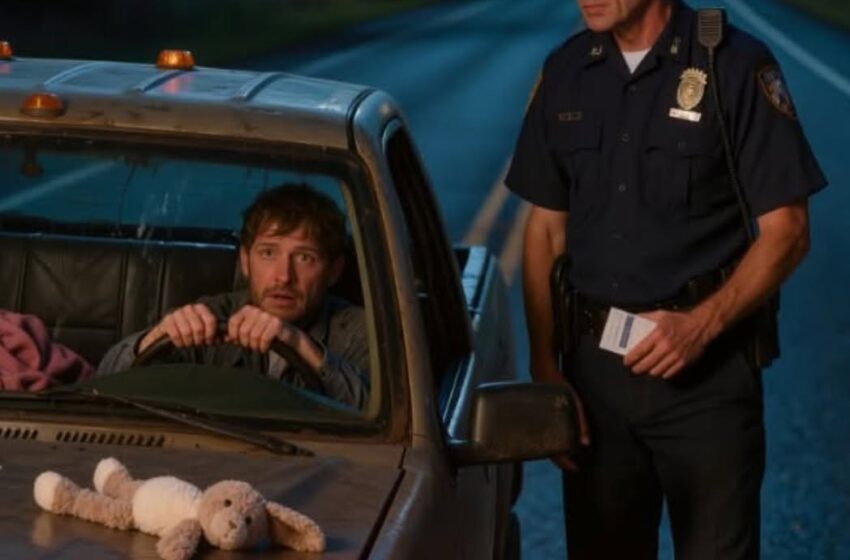
“Don’t make speeches in my office.”
“I’m not making a speech.”
“No. You’re making this harder.”
He stood and crossed to the window.
Outside, patrol cars rolled in and out of the lot like any other day.
That is another cruel thing about the world.
It keeps scheduling normal right on top of what breaks people.
After a moment, he turned back.
“Internal review is mandatory. Effective immediately, you’re reassigned to desk pending outcome.”
I said nothing.
He picked up the report again.
“Off the record,” he said, “I might have done the same thing.”
I looked at him.
He held up one finger.
“Off the record.”
Then he dropped his hand.
“On the record, I have to ask whether you are prepared to say your judgment was impaired by emotion.”
“No, sir.”
His face hardened again.
“That answer matters.”
“I know.”
He waited.
I did not give him another one.
By that evening, it was already out.
I do not know who leaked it.
Maybe a dispatcher’s cousin.
Maybe a traffic camera tech.
Maybe one of the drivers who caught the lights in the wrong place and wrong mood and decided the county message boards needed fresh meat.
All I know is that by six o’clock my daughter had texted me a screenshot of a blurry video taken from inside somebody’s car.
My cruiser in the frame.
Lights washing the windshield red and blue.
A pickup truck riding close behind.
The caption read: WHY IS A COP ESCORTING A SPEEDER LIKE A PARADE FLOAT?
Under it were a few thousand opinions from people who had never stood on that road and never would.
Some called me reckless.
Some called me human.
Some said I should lose my badge before I killed somebody.
Some said the department would have ticketed that father if he’d been poor and unknown.
That one made me laugh without humor, because he had been poor and unknown and I had not written the ticket.
Somebody had already guessed there was a dying child involved.
Somebody else said that was exactly how “special treatment culture” started.
Another said no parent should ever have to race hospital bills and traffic lights at the same time.
That last one stayed with me.
Not because it was dramatic.
Because it was plain.
Plain is usually where the truth lives.
My daughter, Erin, called two minutes later.
I almost let it ring out.
Lila’s question stopped me.
Does she still call you when she’s scared?
I answered on the third ring.
“Hey.”
“Dad.”
Her voice was tight the way it gets when she is trying not to sound upset and ends up sounding eight years old instead of thirty.
“Are you okay?”
“I’m fine.”
“That means you’re not fine.”
I almost smiled.
Some things survive distance.
“It’s been a long day.”
“Was it you in the video?”
“Yes.”
A breath.
Then, “Did you really do that?”
“Yes.”
Another breath.
This one slower.
“Was it worth it?”
I looked at the wall of my kitchen while the refrigerator hummed.
There were old magnets there from places Erin had gone without me.
A lake town.
A conference in another state.
A tiny museum I had once promised to visit and never did.
“Yes,” I said.
She was quiet long enough for me to hear city traffic through her phone.
Then she asked, softer, “Did the kid make it?”
“She got to say goodbye to her dad.”
I heard Erin inhale.
Not because I had answered the question.
Because I hadn’t.
“Oh,” she said.
“Yeah.”
More silence.
Then, “Mom’s going to freak out when she sees this.”
“Probably.”
My ex-wife and I had been divorced eleven years, and Erin still measured some disasters in relation to her mother’s likely reaction.
Some habits outlive marriages.
“Do you need anything?” Erin asked.
There it was.
The thing Lila had told me to leave the door open for.
I could have said no.
That has always been my favorite lie.
“I don’t know yet,” I said.
“Okay,” Erin said. “Then call me when you do.”
She did not hang up right away.
Neither did I.
That might not sound like much.
It felt like a door opening on old hinges.
The next morning I met the woman from the minivan.
Not by choice.
Internal review wanted statements from everybody they could find who had been close to the route.
Her name was Marisol Vega.
Thirty-two.
Dental assistant.
Single mother to a six-year-old boy named Nico who still had a yellow bruise at the edge of his hairline where the car seat straps had caught him when she slammed the brakes.
We sat in a plain interview room with a box of tissues on the table because somebody, somewhere, had decided tissues counted as preparation.
Marisol was not angry in the loud way.
She was more dangerous than that.
She was controlled.
Tired.
Scared enough to have every word sharpened by it.
She folded her hands on the table and looked directly at me.
“I know why you did it now,” she said.
I waited.
“They told me.”
I nodded once.
She held my gaze.
“And I’m sorry for that family. I am. But my son was in the back seat.”
“I know.”
“He started screaming when I hit the brakes. Do you know what it’s like hearing your child scream and not knowing if something in him just broke?”
I looked at the bruise peeking under her son’s hair in the photo clipped to her statement.
“Yes,” I said, though I only knew pieces of it and none of them from a back seat.
She leaned back.
“Then tell me why your emergency mattered more than mine becoming one.”
There it was.
No villain.
No cheap side to take.
Just two truths in the same room refusing to fit inside each other.
“I can’t tell you that,” I said.
“Because it didn’t.”
“Because that isn’t how I thought about it.”
“How did you think about it?”
I took a breath.
“Like every second I lost could take a father out of his daughter’s last minutes.”
Her jaw flexed.
“And every second you gained could have put another parent in the hospital behind you.”
“Yes.”
She blinked.
I think she expected me to defend harder.
Maybe deny the risk.
Maybe wrap myself in the kind of language departments use when they want human choices to sound machine-approved.
I did not.
She looked down at her hands.
“My son asked me last night if the police can scare your car on purpose.”
That one hurt.
“I’m sorry.”
She gave one short nod.
Then she looked back up.
“Would you do it again?”
The room got very small.
Every answer had teeth.
If I said no, I would be lying to her and to myself and to the father in that hospital room.
If I said yes, I would be telling a mother with a frightened child that her fear had not changed my math.
I thought of Lila saying tell them if it’s somebody’s daddy, they should move.
I thought of Nico screaming in his car seat while tires locked and a cruiser cut hard across an overpass.
I thought of policies written because people like me are not always wise when emotion gets involved.
Then I answered.
“Yes.”
Marisol’s face closed.
Not with rage.
With disappointment.
Which is worse to sit across from.
She gathered her bag and stood.
“Then I hope they decide what kind of town this is,” she said.
After she left, I sat in that room alone for a long time.
Her question stayed.
Not because I had answered wrong.
Because sometimes there is no version of right that does not leave a mark on somebody innocent.
Three days later, I went to Lila’s funeral in my dress uniform.
I should not have.
Not with the review pending.
Not with the video still spreading.
Not with my captain already carrying enough reasons to think I had let feeling drive me too far.
But I had made a promise in a hospital room, and promises do not care about optics.
The funeral home sat off a two-lane road behind bare winter trees.
No grand stone building.
Just brick, a sagging awning, and too many cars for the size of the lot.
I parked near the back.
For a minute I stayed in the cruiser with both hands on the wheel.
People always say funerals are for the living.
I have never liked that sentence.
It sounds tidy.
Like grief is a chore we arrange with folding chairs and casseroles.
See more on the next page